
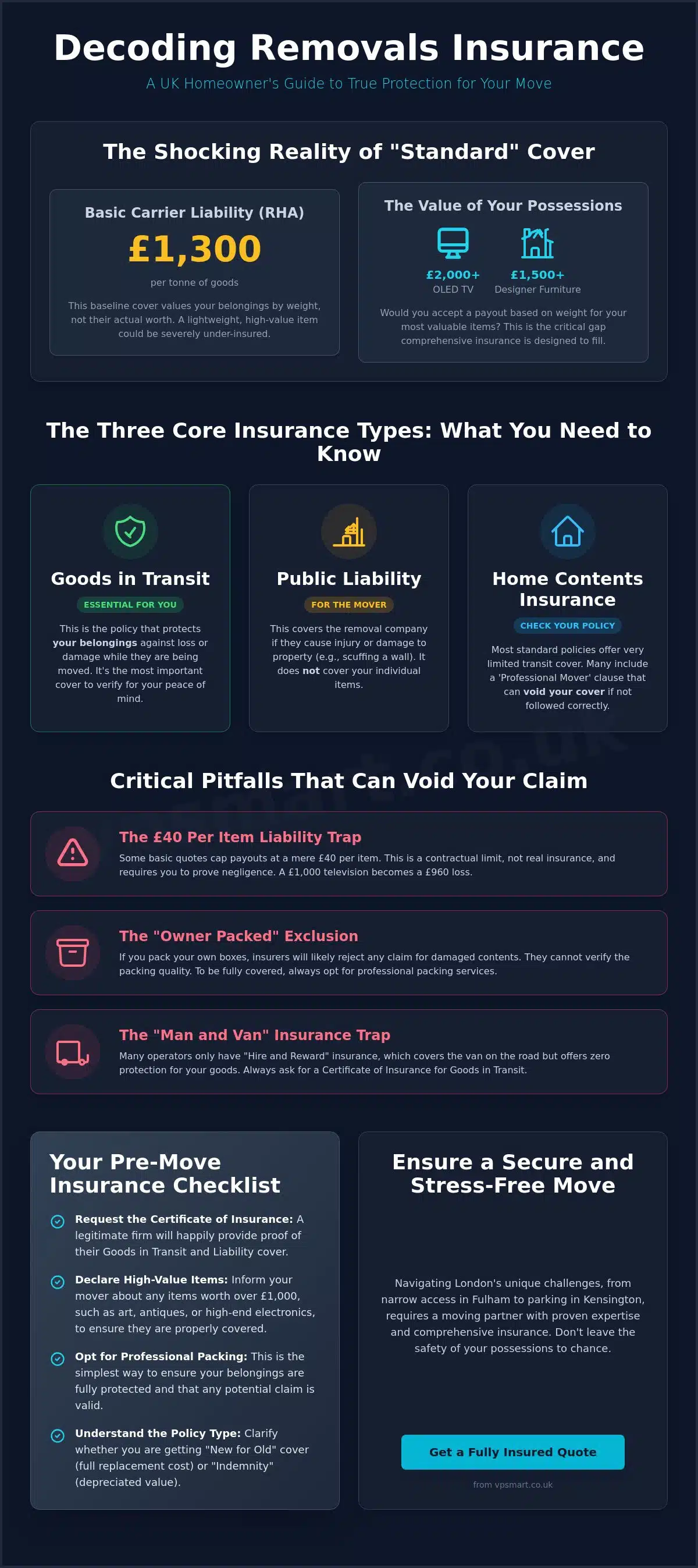
Would you trust a £1,300 per tonne payout to replace a high-end OLED screen or a bespoke oak dining table? While the 2026 RHA Conditions of Carriage provide a baseline for haulage, many London homeowners are shocked to find their most precious items are significantly under-insured during a relocation. This guide offers moving company insurance explained uk homeowners can rely on, cutting through the confusing jargon of Goods in Transit versus Public Liability.
It’s natural to feel anxious about the safety of your possessions as they navigate the tight turns of Richmond or the congestion of Central London. You deserve the peace of mind that comes from complete oversight of your move’s financial protection. We’ll show you how to identify gaps in your existing home insurance and why professional packing is often the key to a valid claim.
By the end of this article, you’ll have a clear understanding of coverage limits and a practical checklist to verify a mover’s status. We’ll compare standard liability with comprehensive policies so you can ensure your transition to a new home is as smooth and secure as possible.
Key Takeaways
- Distinguish between basic carrier liability and comprehensive Goods in Transit cover to ensure your belongings are protected for their actual replacement value.
- This guide provides moving company insurance explained uk homeowners can use to navigate the latest 2026 RHA liability limits and quote surcharges.
- Discover the “Owner Packed” exclusion and why packing your own boxes might unintentionally void your right to a successful damage claim.
- Understand how specific London logistics, including narrow access in Fulham or steep stairs in Kensington, significantly change your move’s risk profile.
- Identify when specialized equipment, such as a hoisting service, requires additional insurance oversight for high-value or oversized furniture.
Removals Insurance Explained: Types of Cover for Your UK Move
Removals insurance is a specialised safeguard designed to protect your household goods against loss or damage during the logistical journey of a relocation. Having this moving company insurance explained uk homeowners often find, is the difference between a stressful transition and a managed environment where every box is accounted for. Goods in Transit insurance serves as the industry standard, providing specific protection for your items while they are physically on the vehicle.
While many firms hold Public Liability insurance, it’s vital to understand that this primarily protects the mover against claims for property damage or personal injury; it doesn’t actually cover your individual belongings. For that, you need to look at the level of replacement cover offered. There are two primary types to consider:
- New for Old: This provides the full cost of a modern equivalent for a damaged item, ensuring your lifestyle remains uninterrupted.
- Indemnity: This pays out the current market value, which accounts for depreciation and wear and tear.
Understanding these mechanisms allows you to maintain complete oversight of your financial risk as you transition between properties.
Contents Insurance vs. Dedicated Removals Cover
Most standard UK home insurance policies offer very limited “contents in transit” protection, often capped at low amounts that don’t reflect the true value of a London household. Many of these policies include a “Professional Mover” clause, meaning your cover is void if you don’t use professional house removals in London. You should also check if your provider requires a 7-day notice period before moving day to activate any existing transit extensions. Without this proactive check, you may find your protection is non-existent when the van pulls away.
What is Limited Liability in the Removals Industry?
Standard terms from many moving company services often include a limited liability clause, which typically caps payouts at just £40 per item. This is a contractual agreement rather than a comprehensive insurance policy, and claiming usually requires proving company negligence, which can be legally complex. Relying on this basic cover leaves you exposed if high-value electronics or antiques are damaged. Choosing a mover with moving company insurance explained uk wide transparency ensures you aren’t left with a £40 payout for a £1,000 television.
Evaluating a Moving Company’s Insurance: Liability and Limits
When you receive a quote for house removals in London, look closely at the cost breakdown. You’ll often see an “Insurance” or “Liability” surcharge listed. This isn’t just an extra fee. It’s the cost of elevating your protection from basic contractual limits to a more robust replacement cover. The Financial Conduct Authority (FCA) regulates how removal firms sell these insurance products, ensuring you receive clear information and fair value. Having moving company insurance explained uk wide ensures you can spot these details before signing a contract.
One common pitfall is the “Owner Packed” exclusion. Most insurers won’t cover damage to items inside boxes you packed yourself. They can’t verify if you used enough bubble wrap or the right box strength. To ensure your belongings are fully protected, opting for professional packing services is often a prerequisite for a valid claim. You must also declare high-value items worth over £1,000, such as antiques or pianos, separately to ensure they are covered for their full replacement price.
The ‘Man and Van’ Insurance Trap
Many “fully insured” man and van services in areas like Kingston or Richmond only carry “Hire and Reward” insurance. This covers the van on the road but offers zero protection for your furniture if it’s damaged. Always ask for a Certificate of Insurance. A professional firm will readily show you their Goods in Transit cover and Employers’ Liability (EL) insurance, proving they are a legitimate, responsible business.
Insuring Specialised Items: Pianos, IT, and Fine Art
Specialised items require tailored oversight. For piano removals, the insurance must cover the delicate internal mechanism, not just the wooden frame. Business relocations face even higher stakes. High-value IT equipment and sensitive data require specific indemnity levels. You can find more detail on commercial protection in our Office Relocation London Guide. If you’re unsure about your specific needs, reviewing our pricing structure can help clarify how different liability levels affect your overall moving costs.
Securing Your London Relocation: Logistics and Risk Management
London’s architectural character often presents logistical hurdles that directly impact your insurance profile. Narrow access points in Fulham or the steep, winding stairs of Kensington apartments significantly increase the risk of accidental damage during a move. To mitigate these risks, VP Smart Removals conducts detailed site surveys in areas like Wandsworth and Richmond to identify potential hazards before the first box is even lifted. This proactive approach ensures you have moving company insurance explained uk wide that actually accounts for the physical reality of your specific property. If your relocation requires a hoisting service for oversized furniture, specific insurance add-ons are necessary to cover the use of specialised heavy machinery.
Why Professional Packing is the Key to Insurance Validity
Insurance providers are far more likely to approve a claim if movers and packers have handled the delicate items. A “Professional Standard” pack involves multi-layered protection for fragile electronics and mirrors, using specific materials that prevent shifting during transit. For those seeking the highest level of coverage, our Professional Packing Services ensure that every item meets the stringent requirements set by underwriters. This level of oversight transforms a box of belongings into a professionally managed asset, significantly reducing the likelihood of a rejected claim.
The Claims Process: What to Do if Something Breaks
If an accident occurs, the Consumer Rights Act 2015 provides the legal foundation for your protection, stating that services must be performed with reasonable care and skill. However, you must adhere to the “7-Day Rule,” which requires reporting any damage within one week of the move to keep the insurance valid. Taking clear “Before and After” photos of high-value furniture provides the objective evidence needed to expedite a claim. VP Smart Removals provides complete oversight throughout this process, acting as a helpful partner to resolve issues quickly and restore your home’s comfort without unnecessary delay.
Secure Your Move with Professional Oversight
Relocating in London is about more than just moving boxes; it’s about protecting your lifestyle and your financial investment. Having this moving company insurance explained uk wide ensures you won’t fall into the trap of limited liability or unverified man and van services. By prioritising professional packing and understanding the critical reporting rules discussed, you maintain complete oversight of the safety of your belongings from Fulham to Wandsworth.
VP Smart Removals offers a dependable bridge to your new home, backed by fully insured Goods in Transit and Public Liability cover. Our expertise extends to specialist handling for pianos and fine art, ensuring delicate items receive the technical care they deserve in areas like Kingston, Richmond, and Kensington. Get a fully insured house removals quote from VP Smart Removals today to experience a move defined by clarity and confidence. Your future home deserves a start that is as secure as it is seamless.
Frequently Asked Questions
Is removals insurance mandatory for a UK house move?
No, removals insurance isn’t a legal requirement for a UK house move, though it’s a vital component of a well-managed relocation. While you aren’t mandated by law to purchase cover, most professional firms require some level of liability protection to proceed with the service. This ensures that any accidental damage during the logistics of your move is handled with professional oversight rather than causing unexpected financial strain.
Does my home contents insurance cover me when I move house?
Many standard home contents policies don’t provide automatic cover for items in transit, or they offer very limited protection. Some insurers include a “moving house” extension, but this often only applies if you use professional house removals services rather than a DIY van. You should always verify your specific policy terms and notify your provider at least seven days before your move to ensure your protection remains active.
What is the difference between Public Liability and Goods in Transit insurance?
Public Liability insurance protects the removal company against claims for injury to people or damage to the property itself, such as a scratched floor in a Kensington apartment. In contrast, Goods in Transit insurance specifically covers your individual belongings while they’re being loaded, transported, and unloaded. Having this moving company insurance explained uk wide helps you understand that a firm with only Public Liability isn’t actually protecting your furniture.
What happens if a removal company breaks something and they aren’t insured?
If an uninsured mover damages your possessions, you may have to pursue a legal claim through the small claims court under the Consumer Rights Act 2015. Without an insurance policy to claim against, you’re reliant on the company’s ability to pay for repairs or replacements out of their own funds. This is why verifying a mover’s insurance status before your relocation is the most effective way to ensure domestic well-being and financial security.
How much does removals insurance typically cost in London?
Removals insurance costs in London vary based on the total value of your belongings and the complexity of the move. As of May 2026, industry data suggests that comprehensive cover arranged through a professional moving firm typically costs around 10% of the total removal fee. For a standard three-bedroom home, this investment provides significant peace of mind, ensuring that high-value items are protected for their full replacement value during the transition.
Disclaimer
Some links in this article may be affiliate links, which means we may earn a small commission if you make a purchase through them, at no additional cost to you. We only recommend products or services we believe provide value to our readers.