
The room is ready, but the facility’s access arrangements, the resident’s familiar belongings and the family’s packing decisions still need to come together. Choosing moving services for assisted living facilities is about more than transporting items from one address to another: the plan needs to work for the resident, the facility and the household.
It’s understandable to feel unsure about what can be brought, what the new room can accommodate and how to keep moving day manageable. A removal company can help with the practical work, but the facility’s requirements should be confirmed and the move’s scope agreed in advance.
This guide explains how to compare movers, coordinate access and timings with the facility, and decide what to move, pack, store or pass on. You’ll also find practical ways to prepare an inventory and organise the day around the resident, so each decision feels more manageable.
Key Takeaways
- Build the move plan around the resident’s routines, room size, facility rules, access and timing.
- Compare self-packing, professional packing and furniture handling to decide what support suits the move.
- When assessing moving services for assisted living facilities, check the written scope, inventory, crew and vehicle requirements, and any access-related charges.
- Confirm facility arrangements, finalise what’s moving and label boxes clearly so belongings are easier to place and identify.
- Prepare a clear list of requirements before requesting a quote, including any packing, storage or furniture services needed.
Moving into assisted living: what should the move plan cover?
A move into assisted living changes more than an address. It can reshape familiar routines and involve choosing which belongings will make a new room feel personal. A good removal plan accounts for both the practical work and the resident’s comfort, rather than treating every item as just another box.
The term assisted living can describe different arrangements. For a neutral overview of what assisted living means, see the general definition, then check directly with the chosen facility about its services and procedures. Room dimensions, permitted belongings, delivery access and move-in timing can all affect what needs to be moved and how the day is organised. Don’t assume one facility’s process applies elsewhere.
What changes when the destination is an assisted living facility?
A smaller room may not accommodate all the furniture from a previous home. Measure key items against the available space before arranging transport, and ask the facility about room dimensions and any restrictions on furniture or personal belongings. Confirm how the removal team should reach the room, including arrival instructions and any access arrangements. These details help shape a realistic inventory and reduce last-minute decisions about what can be delivered.
Who should coordinate the move with the facility?
Choose one family contact to confirm the move-in timing, access arrangements and practical requirements with the facility. Share the agreed details with the removal company before moving day, including the destination room, inventory and any confirmed handling or access considerations. A removal provider can transport belongings and, if agreed, provide relevant packing or furniture services. Personal care and clinical support are separate arrangements, which the family should confirm with the facility.
Before requesting a quote for moving services for assisted living facilities, clarify who is responsible for each part of the move. A simple checklist keeps decisions visible:
- What moves: List the furniture, clothing and personal items going to the new room.
- What is packed: Decide which belongings the family will pack and whether to ask about professional packing.
- What is stored or passed on: Set aside items that won’t travel to the facility and agree what happens to them.
- Who coordinates: Name the family contact and record who will confirm details with the facility and removal team.
With these choices documented, you can discuss a clear scope with a removal provider and check that the proposed plan reflects the facility’s confirmed arrangements. The written list also gives the resident and family a shared reference as moving day approaches.
What moving services can help with an assisted-living move?
The right level of help depends on the belongings, the time available and what the resident and family can comfortably manage. Some families pack themselves and arrange transport; others ask a removal company about packing as well as moving. A combined arrangement can reduce the number of tasks the family needs to coordinate, while leaving decisions about what to take in their hands.
For a combined option, explore professional packing and moving services and confirm exactly what the requested service includes. House removals and packing services may suit parts of the move, but confirm the scope and availability in advance. Agree the inventory and packing responsibilities so everyone knows what the removal team will handle and what the family will pack.
When is professional packing useful?
Professional packing may suit families with limited time, numerous fragile belongings or little capacity to pack around other responsibilities. Self-packing gives the family more control over how personal items are grouped; a combined service may ease the workload. Whichever approach you choose, set aside medicines, documents, clothing and other everyday essentials so they remain accessible rather than going into the general load. Age UK’s moving advice offers further pointers on preparing for a move and deciding what to bring.
Should belongings be moved, stored or sorted first?
Check the room’s capacity before deciding whether larger furniture can come along. If some belongings can’t move straight away, storage may be worth discussing, subject to confirmed availability and terms. Ask the provider whether storage suits the move and clarify the arrangements before including it in the plan. For broader packing considerations, the professional packing and moving page provides further information.
Sort belongings with the resident’s wishes at the centre of the decision. A simple three-way review can help:
- Take: Belongings that fit the room and matter to the resident’s comfort or routine.
- Store: Items to keep but not move immediately, once storage arrangements are confirmed.
- Pass on: Belongings the resident chooses to donate, give to family or otherwise rehome.
For larger pieces, ask whether furniture disassembly and reassembly is needed, and identify the items when discussing the removal scope. This helps the team plan the work and understand which furniture is intended for the destination. If storage could help with belongings that won’t move at once, check the provider’s service details and confirm suitability and availability for your requirements.
How to compare movers for an assisted-living facility move
A general removal company may be able to transport household belongings, but don’t assume it has specialist care expertise or experience working with every facility. Compare providers on the practical scope of the move, and check any claims about specialist handling, staff screening, insurance or previous experience before relying on them. The facility’s instructions should guide access and arrival arrangements.
For moving services for assisted living facilities, a clear written plan is more useful than a broad promise. Give each mover the same item inventory and information about the collection and delivery addresses, room access, furniture, and any packing or storage needs. This makes it easier to compare proposals on the same basis and spot differences in what’s included.
What should a removal quote make clear?
Check which tasks are included or excluded, such as packing, loading, transport, and furniture disassembly or reassembly. Ask how the quote reflects the inventory, agreed timing and access arrangements, including any applicable access-related charges. If belongings may need temporary storage, clarify whether that is included or requires a separate arrangement. You can review the provider’s removal pricing information, then confirm how the proposed scope applies to your particular move.
Don’t compare quotes by the headline total alone. A lower figure may cover fewer tasks, while another proposal may include packing or furniture work. Check whether the cost is based on an hourly rate or a fixed-price project, and ask how changes to the inventory or agreed plan would be handled. Rates for hourly work can vary with the day and crew size, so compare the assumptions behind each quote. Ask the provider to record any revised scope in writing.
What questions should families ask prospective movers?
Specific questions can expose gaps before moving day. Ask how the team will receive facility instructions, who is responsible for confirming arrival arrangements and what information they need about access. Explain which belongings are fragile or require careful handling, and ask how packing and furniture tasks will be managed. If the plan changes, find out who should be contacted and how the change will be agreed.
Before choosing, ask the provider to confirm the following in writing:
- Scope: Which items and tasks are included, and what is excluded?
- People and vehicle: What crew and vehicle requirements have been allowed for based on the inventory?
- Claims: What evidence or details can they provide for any insurance, screening, specialist handling or experience claims?
- Moving-day contact: Who is the family’s point of contact, and what timing and facility arrangements have been agreed?
This approach helps families assess moving services for assisted living facilities on clarity and fit, without confusing removal work with care provision. A documented scope also gives the family and removal provider a shared reference if details need checking before the move.
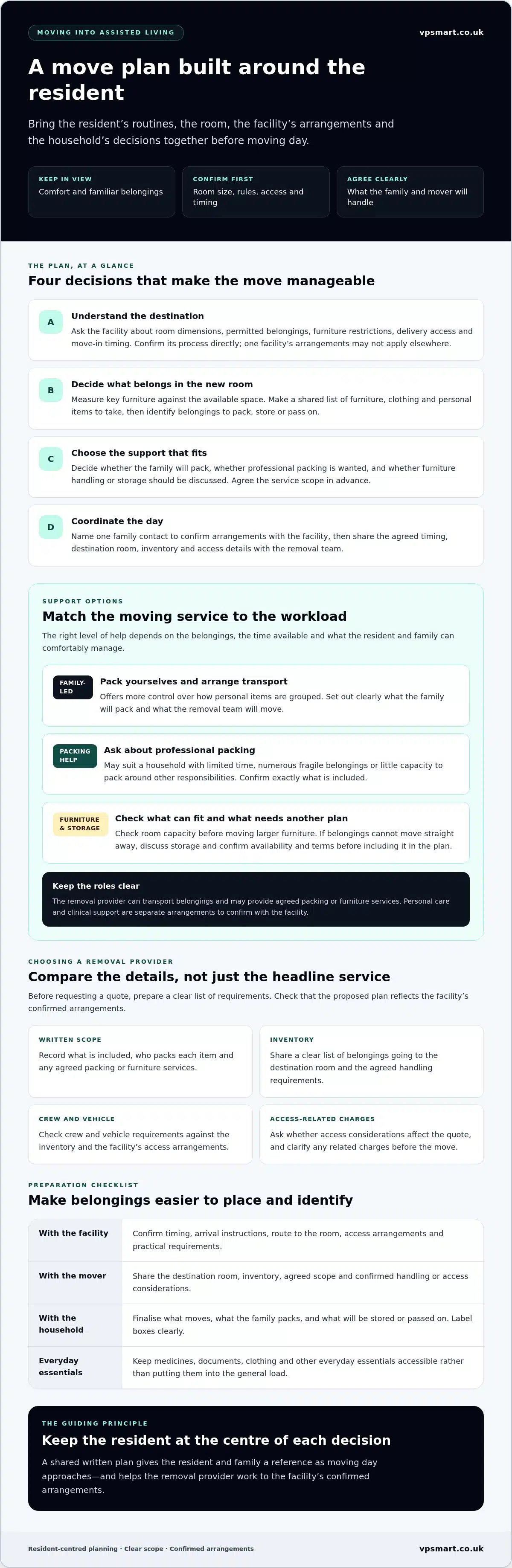
How to prepare the resident, belongings, and facility for moving day
A written sequence helps everyone know what happens next. It also gives the resident and family a clear way to check details with facility staff and the removal team, rather than relying on memory during a busy day.
What should families confirm with the facility beforehand?
Ask staff to confirm the move-in date, expected arrival window, access route and any booking process. Check the room measurements and whether planned furniture or personal belongings are suitable. Find out who to contact if the removal team is delayed or arrangements change. Facility procedures differ, so confirm each detail directly rather than assuming the same access or delivery rules apply everywhere.
How can belongings be packed for an easier transition?
Keep everyday essentials separate from items that can be unpacked later. Label each box with its destination room and a brief description of the contents, such as “bedroom, jumpers” or “bathroom, toiletries”. A simple inventory helps the family identify boxes at delivery. If packing everything feels difficult, discuss professional packing as part of the agreed removal scope. If belongings can’t all move at once, ask about storage options and confirm availability and terms before relying on them.
Use this sequence to keep the practical tasks in order:
- 1. Confirm facility details. Record the agreed date, arrival window, access route, room measurements and any facility-specific instructions.
- 2. Finalise the inventory. Check what is travelling, including furniture, and share the final list with the removal team.
- 3. Pack and set essentials aside. Agree who is packing which belongings, and keep frequently needed items easy to reach rather than buried in boxes.
- 4. Label boxes clearly. Include the destination room and contents so family members can direct items when they arrive.
- 5. Oversee delivery. Agree who will meet the removal team, answer practical questions and pass on facility instructions.
Before the day, decide who will communicate with the removal team and make sure they have the family contact’s details. Share confirmed changes promptly with both the facility and the mover. If the agreed plan includes packing or storage, VP Smart Removals offers these services, subject to confirming availability and scope for the move.
Arrange a removal plan that fits the move and the resident
A clear quote starts with a clear brief. Before contacting a removal company, list what needs to travel, what packing support the family wants and any details the facility has confirmed. This helps the provider assess the requested work and prepare a quote based on the actual move, rather than assumptions about a typical household.
What information should a family prepare for a quote?
Gather the proposed move date, collection and delivery addresses, and an inventory of belongings. Include furniture dimensions or details of items that may need disassembly and reassembly. Add confirmed information about delivery access, arrival arrangements and facility instructions. Be specific about packing needs, and mention whether storage may be required if some belongings won’t move immediately. Check service availability and the requested scope with the provider before making plans around a booking.
VP Smart Removals provides house removals, packing, storage, and furniture disassembly and reassembly. These services may be relevant to particular parts of a move, subject to confirming the requirements and availability. The company is a removals provider, not a care provider or a confirmed assisted-living specialist. Families should arrange personal care and resident support separately with the appropriate people.
How can the family make the final arrangements clearer?
Name one person to share updates between the family, facility and removal company. This gives everyone a clear contact for confirming practical details and discussing any changes to the plan. Before confirming a booking, review the written quote and agreed service scope, including the tasks, schedule and any packing, storage or furniture arrangements. Ask for corrections if the document doesn’t match what the family and provider have discussed.
Keep care arrangements separate from removal logistics, and check directly with facility staff if its instructions or access arrangements change. A written plan can serve as a shared reference for the resident’s supporters and the removal team, helping everyone understand their role.
For families considering moving services for assisted living facilities, the next step is to gather confirmed details and request a clearly scoped quote. A complete inventory and facility instructions give the provider a better basis for discussing the move and any relevant services.
Make the next move feel more manageable
A calmer transition starts with a plan built around the resident, the facility and the belongings that matter most. Confirm room capacity, access arrangements and timing with facility staff, then share those details with your removal provider. A clear inventory and written scope help everyone understand what’s being packed, moved or stored.
Choosing moving services for assisted living facilities also means checking that the provider’s services match your needs. VP Smart Removals provides house removals, packing, storage and furniture assembly, with services available across the UK. It’s a removals provider, not a care provider or confirmed assisted-living specialist, so arrange personal care and resident support separately.
With the practical arrangements agreed and the resident’s preferences kept at the centre, you can approach moving day with greater confidence, one clear step at a time.
Frequently Asked Questions
What should I look for in moving services for an assisted living facility?
Look for a removal provider whose written scope matches the move, rather than assuming it offers specialist care expertise. Compare the inventory, packing responsibilities, furniture handling, crew and vehicle requirements, access arrangements and process for changes. Ask the facility to confirm its move-in instructions, then check that the provider has included them in its plan. Verify any claims about insurance, screening or specialist experience before relying on them.
Can a regular removals company help with a move into assisted living?
Yes, a general removal company may be able to move household belongings, pack items or provide storage, depending on its services and confirmed availability. Don’t assume it has assisted-living expertise or a relationship with the facility. Confirm the provider’s experience and handling arrangements directly, and agree in writing what it will and won’t do. Personal care and clinical support need to be arranged separately with the appropriate people.
How do I coordinate a removal company with an assisted living facility?
Choose one family contact to liaise with the facility and removal provider. Ask facility staff to confirm the move date, arrival window, access route, room details and any booking or delivery process. Give the removal company the confirmed instructions, inventory and contact details before moving day. If timing or access changes, have the named contact update both parties so the resident and everyone supporting the move know what to expect.
What should I ask the facility before moving furniture into a room?
Ask for the room’s measurements and check whether each planned item will fit, including larger pieces that may need to be assembled or dismantled. Confirm which furniture and personal belongings are permitted, how the delivery team should reach the room, and whether arrival needs to be arranged in advance. Don’t assume the facility follows another provider’s rules. Share confirmed access instructions with the removal company when agreeing the move plan.
Can a removal company pack and store belongings before an assisted-living move?
Some removal providers offer packing and storage, but check which services are available and confirm the requested scope before making arrangements. Ask what packing tasks are included, which items the family should handle, and what storage terms and availability apply. Keep everyday essentials separate so they’re easy to find after delivery. VP Smart Removals lists packing and storage among its services, but these should be confirmed for the individual move.
How far in advance should I arrange moving services for assisted living?
There’s no single lead time that suits every move, so start planning once the facility’s move-in date and arrangements are known. Contact removal providers to check availability for the required date and allow time to share an inventory, confirm access details and agree the written scope. If the date or facility instructions are still subject to change, explain that when enquiring and confirm arrangements again once they’re settled.
What information do I need to get a removal quote for this type of move?
Prepare the proposed move date, collection and delivery addresses, and an itemised inventory, including furniture dimensions where useful. Note which belongings need packing, whether furniture disassembly or reassembly may be needed, and whether storage is being considered. Include facility-confirmed access instructions and arrival arrangements. Ask the provider to state what’s included, excluded and dependent on availability, so you can compare quotes against the same requirements.
Disclaimer
Some links in this article may be affiliate links, which means we may earn a small commission if you make a purchase through them, at no additional cost to you. We only recommend products or services we believe provide value to our readers.