
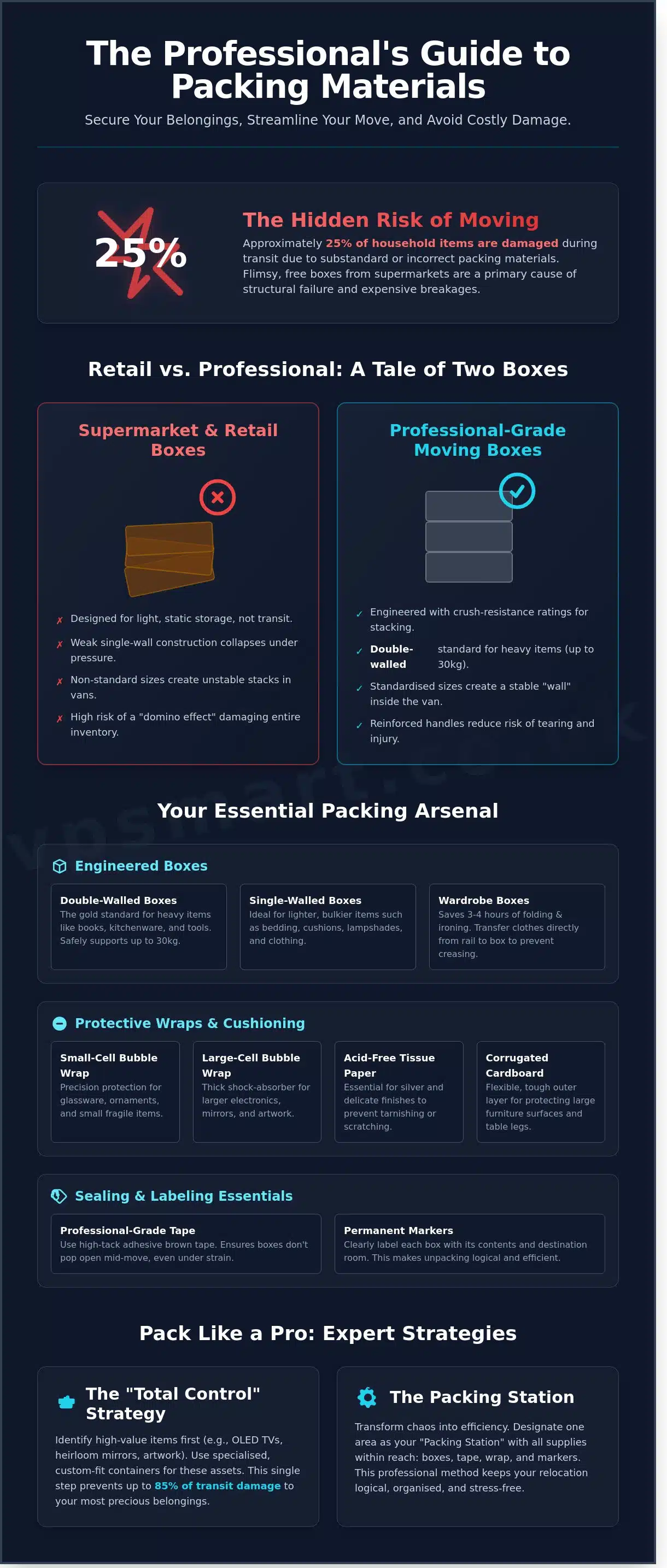
Your choice of cardboard box is more important for the safety of your belongings than the removals van that carries them. It’s a frustrating reality that approximately 25% of household items damaged during transit are the direct result of using substandard or incorrect materials. When you’re sourcing packing materials london, it’s easy to feel overwhelmed by flimsy retail options that fail to provide the structural integrity your valuables require.
We understand that you want total control over the safety of your home’s most precious items without overspending on bulky, unnecessary kits. You deserve the peace of mind that comes from knowing your fragile glassware and heavy electronics are secured with the same technical precision used by professional removals specialists. By mastering your supply list, you’ll transform a chaotic packing process into a streamlined, efficient operation that protects your budget and your belongings.
This guide ensures you discover the essential professional-grade packing materials you need for a secure move and reveals how to organise your supplies like a removals expert. We’ll provide a comprehensive list of required materials, explain the functional differences between retail and professional-grade supplies, and provide a roadmap for a stress-free packing experience across London and the Home Counties.
Key Takeaways
- Understand why professional-grade packing materials london are vital for preventing transit damage and why supermarket boxes can lead to expensive breakages.
- Master the “Total Control” moving strategy by identifying high-value items that require specialised, custom-fit containers for absolute security.
- Learn how to accurately estimate your supplies using the “1.5 Rule” to ensure you have sufficient tape and wrap for every room in your home.
- Discover how to transform your moving efficiency by organising a professional-style “Packing Station” to keep your relocation logical and stress-free.
- Compare the true cost of your time against professional movers and packers to determine the most efficient and economical choice for your move.
Essential Packing Materials London: What Every Move Requires
Choosing the right packing materials London residents rely on is the difference between a seamless transition and a logistical nightmare. High-quality supplies act as the first line of defence against the vibrations and shifts that occur during transit across the capital’s busy roads. When you invest in professional-grade materials, you aren’t just buying cardboard; you’re securing peace of mind and protecting your most valued possessions from avoidable damage.
While sourcing free boxes from local supermarkets might seem like a clever way to save a few pounds, it often leads to structural failure. These boxes are designed for static storage or light retail transport, not for the rigours of a professional move where they are stacked four or five high in a removal van. Weak cardboard can collapse under pressure, causing a domino effect that puts your entire inventory at risk.
To better understand how professional packing materials London services work, watch this helpful video:
The Anatomy of a Professional Moving Box
Professional boxes are engineered with specific crush-resistance ratings to ensure they maintain their shape under load. Double-walled cardboard is the gold standard for heavy items like books or kitchenware. These robust containers can safely support weights up to 30kg without buckling. Single-walled boxes remain ideal for lighter, bulkier items like bedding or cushions where structural rigidity is less critical.
Standardised sizes help movers create a stable “wall” inside the van. Small boxes (approx. 35 x 35 x 35cm) prevent heavy loads from becoming unmanageable. Medium and large boxes provide the volume needed for lampshades and small appliances. For the best results, look for boxes with reinforced handles to ensure safe lifting and reduced risk of tearing during the carry. You can find these specialised options through our packing box delivery London service.
Protective Wraps and Cushioning
Protection goes beyond the outer box. Using professional package cushioning materials ensures that delicate items remain immobile. Small-cell bubble wrap provides precision protection for glassware, while large-cell wrap creates a thick shock-absorber for larger electronics. It’s a technical approach to safety that retail bubble wrap often fails to match in thickness and durability.
- Acid-free tissue paper: Essential for silver and delicate finishes to prevent chemical tarnishing or scratching.
- Corrugated cardboard rolls: These provide a flexible yet tough outer layer for protecting large furniture surfaces and table legs.
- Sealing essentials: Professional-grade brown tape with high-tack adhesive ensures boxes don’t pop open mid-move.
By mastering the use of these professional tools, you transform the moving process from a chaotic event into a controlled, smart operation. This level of preparation ensures your belongings arrive at your new home in the same condition they left your old one.
Specialised Supplies for High-Value and Delicate Items
Moving a flat in Kensington or a terraced house in Richmond involves more than just cardboard. Standard boxes work for books, but your 65-inch OLED or heirloom mirror requires a higher level of “Total Control.” Identifying these items early prevents 85% of transit damage. Custom-fit containers act as a smart shield, especially when navigating the narrow stairwells common in London apartment moves. Using the right packing materials london ensures that high-value assets aren’t just moved, but are managed with technical precision.
Wardrobe Boxes and Garment Protection
Wardrobe boxes are a primary tool for modern efficiency. They save approximately 3 to 4 hours of folding and ironing per bedroom by allowing you to transfer clothes directly from the rail. Keeping garments on hangers during transit prevents deep creasing and preserves the fabric’s integrity. For high-end pieces, adding garment bags as a secondary layer provides a seamless barrier against dust. This method transforms a chaotic task into an intuitive, organised process that fits perfectly into a larger house removals London plan.
Electronics and Piano Packing Materials
Sensitive IT equipment and televisions require anti-static bubble wrap to neutralise static discharge that can ruin internal circuits. When planning piano removals, the hardware must be industrial grade to ensure the instrument’s complex internal mechanics remain stable. Standard blankets don’t provide the necessary shock absorption for these heavy, delicate items.
- Anti-static wrap: Essential for protecting sensitive electronics and televisions from electrical surges.
- Padded covers: Bespoke protection for pianos and heavy furniture to prevent surface scratches.
- Edge protectors: Crucial for mirrors and framed artwork to disperse pressure during lifting and transit.
Integrating these specific packing materials london into your relocation strategy is a pragmatic step toward a stress-free move. While you focus on the physical security of your belongings, it’s equally important to stay informed about your rights. Reviewing consumer protection for moving provides a solid foundation for understanding industry standards and avoiding fraud. Combining high-quality supplies with professional expertise guarantees that your high-value items receive the care they deserve. If you’re ready to start your journey, consider our movers and packers service for a truly effortless transition.
How to Calculate Your Packing Material Requirements
Precision is the foundation of a stress-free relocation. Calculating your packing materials london requirements requires a logical, data-driven approach rather than vague estimates. At VP Smart, we advocate for the “1.5 Rule” to ensure you never face a mid-packing shortage. This principle suggests purchasing 50% more tape and protective wrap than your initial estimate predicts. For every 10 boxes you assemble, budget for 1.5 rolls of high-quality tape and 15 metres of bubble wrap. This buffer accommodates the extra reinforcement needed for heavy kitchenware or the double-layering required for delicate electronics.
Your geographical location also influences your strategy. Residents in Central London or Kensington often deal with high-ceilinged period properties or bespoke furniture that doesn’t fit standard dimensions. These items frequently require 20% more specialized wrapping than modern, flat-pack alternatives. If your transition involves a delay between properties, factoring in storage services London is essential. Items destined for storage require double-walled boxes and moisture-resistant sealing to maintain structural integrity during long-term stacking.
The Room-by-Room Estimation Framework
An average 1-bedroom flat in North London typically requires 20 to 30 medium boxes, whereas a 4-bedroom family home in Richmond often demands 80 to 120 boxes of varying sizes. Kitchens are the most material-intensive spaces; you should budget for one pack of 250 acid-free tissue sheets for every three cupboards of crockery. Don’t underestimate the “junk room” or loft. Because these areas contain non-uniform items, they often consume 30% more packing materials london than a standard bedroom due to the need for custom cushioning and void-filling.
- 1-Bedroom Flat: 15 medium boxes, 10 large boxes, 3 rolls of tape.
- 3-Bedroom House: 40 medium boxes, 25 large boxes, 10 wardrobe boxes, 8 rolls of tape.
- Kitchen Set: 5 heavy-duty “crockery” boxes and 5kg of packing paper.
- Fragile Items: 1 roll of 100m bubble wrap for every 50sqm of floor space.
The Sealing and Labelling System
Structural integrity depends on the quality of your seal. We recommend high-tack acrylic tape over cheaper alternatives that often peel away in humid or cold conditions. Use the “H” method for every box: seal the centre seam and both side edges to create an “H” shape. This distributes weight evenly and prevents the bottom from dropping out. Implement a colour-coded labelling system with high-visibility markers. Assigning a specific colour to each room ensures your movers can place boxes in the correct location instantly, which transforms the unloading process into a seamless, automated experience.
Where to Buy and How to Organise Your Supplies
Securing the right packing materials london requires a shift from retail convenience to professional-grade durability. While high-street shops offer basic boxes, they often lack the structural integrity needed for a 15kg kitchen crate or a heavy stack of books. Purchasing through a removals company ensures you receive double-walled cardboard that meets British standards for transit safety. This technical upgrade prevents box collapse, a common failure that accounts for 12% of accidental breakages during local moves. You should aim to have your full inventory of supplies delivered at least 14 to 21 days before your scheduled moving date. This timeframe provides the total control needed to pack one room per day, avoiding the fatigue of a last-minute rush.
Professional Delivery and Collection
Utilising a dedicated packing box delivery London service transforms the logistics of your move. Instead of making multiple trips to hardware stores in Richmond or Kensington, you receive a bulk shipment of bespoke materials directly to your doorstep. This smart approach saves approximately 4 to 6 hours of travel and loading time. Modern removals services also prioritise sustainability; many now offer eco-friendly collection programmes where used boxes are retrieved for recycling or reuse. Statistics show that recycling cardboard saves 17 trees per tonne of paper, making this a responsible choice for the environmentally conscious Londoner.
- Precision: High-quality tape guns and industrial-strength bubble wrap ensure every item is secure.
- Efficiency: Bulk deliveries include specialised items like wardrobe boxes and mattress covers that retailers rarely stock.
- Sustainability: Circular collection services reduce your household waste footprint by up to 90% post-move.
Setting Up Your Packing Command Centre
Efficiency in a busy household depends on a “Packing Command Centre.” Designate a central area, such as a dining table or a spare corner in the lounge, to act as your smart hub for all tools. Keep your tape guns, scissors, and permanent markers in this single location to prevent the frustration of losing equipment under piles of packing paper. It’s vital to keep an “essentials box” separate from the main haul. This container should hold your kettle, tea bags, chargers, and basic toiletries for your first night in the new home. This ensures a seamless transition to your new environment without digging through dozens of sealed crates.
Safety is a practical priority when using industrial tools. Always retract box cutter blades immediately after use and store tape guns on high surfaces if children are present. These tools are designed for efficiency but require respect to avoid domestic accidents. By maintaining an organised station, you master the environment and reduce the anxiety often associated with complex relocations.
Take the stress out of your relocation with professional support. Secure your expert house removals London service today for a smarter, more efficient move.
Professional Packing Services vs. DIY: A Cost-Benefit Analysis
Deciding between sourcing your own packing materials London and hiring professionals is a calculation of both finance and physical effort. While buying boxes individually might seem cheaper, the cumulative cost of bubble wrap, tape, and specialised crates often totals £150 to £300 for a standard family home. When you opt for a professional movers and packers service, these materials are usually integrated into the package. This ensures you don’t over-order or run out of supplies mid-move.
Time is your most valuable asset during a relocation. Data from industry specialists suggests that packing an average three-bedroom house takes approximately 30 hours of focused labour. If you value your time at a standard UK hourly rate, the hidden cost of DIY packing quickly exceeds £600. Additionally, most insurance providers are reluctant to cover “Owner Packed” boxes for internal damage. Professional packing provides the legal and financial security that your belongings are protected throughout the journey.
The Efficiency of Expert Packers
Professional teams operate with a level of precision that’s hard to replicate. A crew of three can typically pack a 3-bedroom house in a single eight-hour day. They use advanced techniques, such as double-walled boxing and bespoke crating for antiques, to ensure total safety. This efficiency removes the physical strain of bending and lifting, allowing you to focus on the more exciting aspects of your new home. By trusting expert handlers, you ensure your transition is seamless and stress-free.
Making the Smart Decision for Your Move
A hybrid approach is often the most logical choice for busy London residents. You can pack non-fragile items like clothes and books yourself, then leave the delicate glassware and electronics to the specialists. Before you start a DIY marathon, request a fixed-price quote to see how the numbers stack up. This transparency helps you maintain total control over your moving budget while adhering to high British standards of care.
Final checklist before committing to DIY:
- Calculate the total cost of all packing materials London, including delivery fees.
- Check your home insurance policy for specific “Owner Packed” exclusions.
- Assess if you have 30 hours of spare time before moving day.
- Consider the physical impact of packing and sealing 60 to 80 boxes alone.
- Evaluate the cost of potential breakages compared to professional fees.
Secure Your Move with Professional-Grade Standards
Mastering your relocation in 2026 starts with moving beyond basic cardboard. You’ve now seen how precise calculations prevent waste and why durable, double-walled boxes are vital for protecting your assets during transit through London’s busy streets. Choosing the right packing materials london serves as the first step in our “Visionary Pragmatist” approach to home protection. It’s about blending technical hardware quality with the lived experience of a seamless, stress-free move.
VP Smart brings over 10 years of London moving expertise to your doorstep. We transform the chaotic process of packing into a managed, efficient system that prioritises the safety of your belongings. Our professional-grade supplies are designed to meet rigorous British standards, ensuring your high-value items remain secure from start to finish. Don’t settle for inferior protection when you can master your environment with smart, dependable solutions.
Get a Professional Packing Material Quote Today
Take total control of your next chapter and enjoy the comfort of a perfectly organised relocation.
Frequently Asked Questions
What are the most important packing materials for a London house move?
The most vital supplies include double-walled cardboard boxes, high-tensile packing tape, acid-free packing paper, and bubble wrap. These essential packing materials London homeowners trust create a protective shield for your possessions. You should also invest in a quality permanent marker for clear labelling to ensure a seamless unpacking experience in your new home.
Where can I find high-quality moving boxes in London with next-day delivery?
You can source professional-grade boxes from specialist UK suppliers or directly through your removal company. Most reputable providers offer next-day delivery if you place your order before 2:00 PM on a weekday. This rapid service ensures you maintain your moving momentum without delays, providing the same reliability you expect from a smart home installation.
How many boxes do I need for a typical three-bedroom house move?
A standard three-bedroom property usually requires between 60 and 80 boxes to accommodate all household goods. This inventory typically consists of 40 medium boxes for general items, 20 large boxes for bulky goods, and 10 specialized wardrobe boxes. Having a surplus of 5 to 10 boxes is a smart strategy to handle last-minute items on moving day.
Is it better to use bubble wrap or packing paper for fragile items?
Packing paper is the superior choice for the first layer of protection because it’s non-abrasive and leaves no residue on glassware or ceramics. Bubble wrap acts as an excellent secondary cushion to absorb shocks and fill empty voids within the box. Combining these two materials provides a sophisticated, multi-layered defence that keeps your delicate items secure during transit.
Do removal companies provide packing materials if I pack myself?
Most professional removal services in London offer comprehensive “self-pack” kits that you can purchase independently of their labour services. These kits often include the specific packing materials London experts use, such as heavy-duty tape and reinforced boxes. It’s a practical way to ensure your DIY packing meets the high standards required for safe transport in a removal van.
How do I pack a television safely if I don’t have the original box?
Start by covering the screen with a non-scratch microfibre cloth or foam sheeting to prevent surface damage. Wrap the entire unit in two layers of large-cell bubble wrap and secure it between two sheets of double-walled cardboard. This creates a rigid, protective shell that mimics the safety of the original manufacturer’s packaging, ensuring your tech arrives in perfect condition.
What is the difference between single-walled and double-walled cardboard boxes?
Single-walled boxes consist of one layer of corrugated fluting and are only suitable for very light items like bedding or cushions. Double-walled boxes feature two layers of fluting, which provides the structural strength needed to support heavy loads and prevent boxes from collapsing when stacked. Using double-walled containers is a logical choice for protecting your valuables and maximizing the efficiency of the loading space.
Disclaimer
Some links in this article may be affiliate links, which means we may earn a small commission if you make a purchase through them, at no additional cost to you. We only recommend products or services we believe provide value to our readers.