
Finding somewhere for the sofa may be simpler than deciding who owns it. During a separation, furniture can become a source of worry: one person may fear it will be sold or damaged, while both need to make space for separate homes. Treat furniture storage during separation uk as two separate questions: first, clarify what is known about ownership; then decide how to protect the items while matters are resolved.
It’s understandable to feel unsure, especially when furniture was bought together, given as a gift or used by the whole household. This guide explains what information may help an ownership discussion, how to make a clear record and how to keep conversations practical. If you can’t yet agree who keeps an item, temporary storage may offer breathing space, provided you agree what will be stored and how access will work. A removals and storage provider can help with handling, but can’t determine legal ownership. Check collection, access, inventory and handling arrangements with the provider before making plans.
Key Takeaways
- Separate the question of who owns each item from the practical decision about where to keep it temporarily.
- Gather receipts, bank statements, finance agreements, messages and written arrangements to organise the facts for discussion. These are not a guaranteed legal test.
- Compare agreed shared access, collection by agreement and temporary third-party storage. Settle access and coordination before choosing an option.
- For furniture storage during separation uk, make a dated record of each item and any existing damage before packing or moving it.
- Agree what will be stored and how access will work. Seek legal advice if ownership remains disputed, as a storage provider handles logistics rather than deciding who owns the furniture.
Furniture storage during separation in the UK: what needs deciding first?
There are two separate decisions to make: who owns or should keep each piece of furniture, and where it can stay safely in the meantime. Temporary furniture storage is a practical arrangement, not a legal ruling. Putting a sofa or dining table into storage doesn’t, by itself, establish who owns it or decide what should happen to it later.
This distinction can bring some order to a difficult situation. You might agree to store a disputed wardrobe while you gather purchase records or seek advice. Before arranging this, agree which items are included and how access will work. A removals and storage provider can help with handling and logistics, but can’t determine ownership.
Does separation automatically decide who keeps the furniture?
No single assumption works for every item or relationship. Who paid, who uses a piece, whose name appears on a finance agreement, when it was acquired and any arrangements between you may all be relevant to a discussion. None should be treated here as a universal rule. Relationship status and the wider circumstances can affect how property questions are handled. If you need advice for your situation, speak to a family-law solicitor before selling, giving away or disposing of disputed furniture.
Which UK jurisdiction applies to a separation?
England and Wales, Scotland, and Northern Ireland have distinct legal jurisdictions, and relevant rules and processes can differ. Don’t assume that guidance written for one part of the UK applies to another. Confirm which jurisdiction is relevant to your circumstances and check current guidance or consult a solicitor qualified to advise there. The general Division of property laws overview includes a UK section, but it isn’t a substitute for tailored legal advice.
For furniture storage during separation uk, treat legal questions and practical arrangements as separate tasks. Note which items you agree on and which remain in dispute, then seek advice where ownership is unclear. Once you’ve agreed what may be stored and how access will work, you can consider a temporary storage option without presenting it as a final decision about who keeps the furniture.
Who owns furniture after a separation? Evidence and circumstances to consider
There isn’t one document or simple rule that settles every furniture disagreement. Gather information that helps both of you discuss how an item was acquired and what was agreed at the time. These records provide context, not a legal test or a guarantee of who will keep the furniture. A solicitor can explain how the evidence may apply to your circumstances and the relevant UK jurisdiction.
What records can help clarify who paid for an item?
For each disputed piece, note its description, approximate purchase date and the names shown on any available paperwork. Keep copies of:
- Receipts, invoices or order confirmations
- Bank statements or records of transfers that may show payment
- Credit or finance agreements, including whose name appears on them
- Messages or emails discussing the purchase, payment or ownership
- Any written arrangements made between you about furniture
A receipt in one person’s name may help explain a purchase, but it doesn’t necessarily settle every question about ownership. For example, one person may have paid upfront on behalf of both partners, or the furniture may have been bought using shared funds. Keep original records where possible and make copies so each person can refer to the same information.
How should jointly bought, gifted or inherited furniture be treated?
Make separate notes for furniture with a clearly documented individual purchase and items either of you says were bought together. Shared purchases may raise questions about contributions and any agreement made at the time. For a gift, record who gave it and look for a card, message or other document that may clarify the giver’s intention. Inherited furniture may raise different questions, so note how it came into the household without assuming its history alone decides the outcome.
If you’re married, in a civil partnership or cohabiting, your relationship status may be relevant to the advice you need. Citizens Advice explains some legal differences for cohabiting couples. Use general guidance as a starting point, then ask a family-law solicitor how the relevant rules apply to your situation.
Mark items you can’t agree about as unresolved in your notes. Keep copies of relevant records and avoid selling, giving away or disposing of disputed furniture while you seek advice. If you later agree that particular items need temporary storage, VP Smart Removals provides furniture storage services. Confirm arrangements directly, as a provider can handle logistics but can’t determine ownership.
Keeping disputed furniture: compare storage, shared access and an agreed collection
If neither of you has room for a large item, or you can’t yet agree who should keep it, there are practical ways to avoid rushing a final decision. Choose an arrangement that both parties understand and can manage. Moving furniture into storage doesn’t decide who owns it; it changes where it’s kept for the time being.
Compare the options before making arrangements:
| Option | Practical benefit | Coordination and questions to settle |
|---|---|---|
| Agreed shared access | The furniture stays available for use in an agreed home. | Who can use it, and when? How will you arrange access? Who will look after it and record its condition? |
| Collection by agreement | One person takes an item they’ve agreed to keep, avoiding ongoing shared access. | Confirm which items are being collected, the collection arrangements and what happens if either person needs to change the plan. |
| Temporary third-party storage | Furniture is kept out of either home while you consider next steps. | Agree who arranges and pays for storage, who can authorise access or collection, and when you’ll review the arrangement. |
When can temporary furniture storage make sense?
Storage may help when a shared home is being cleared, neither person has room for an item, or you need time to discuss its allocation. Agree the intended storage period and access arrangements in writing before anything is moved. Check the provider’s service terms, including who may authorise access or collection and what happens if plans change. Confirm available arrangements directly rather than assuming they’re included.
What should an agreement say before furniture is moved?
Make the plan specific enough that both parties can check what was agreed later. Identify every item, note its current condition, state the agreed storage location and record who arranged the move. Set out who can request access or collection, how storage responsibilities and costs will be handled, and how you’ll record changes. If consent to moving or disposing of an item is disputed, pause and seek legal guidance before proceeding.
A written agreement can reduce uncertainty without resolving the ownership question. For furniture storage during separation uk, agree the practical arrangements first, keep a copy of the plan and review it together if circumstances change. A removals and storage provider can help with handling and logistics once you agree what’s moving and how access will work. It can’t decide who owns the furniture.
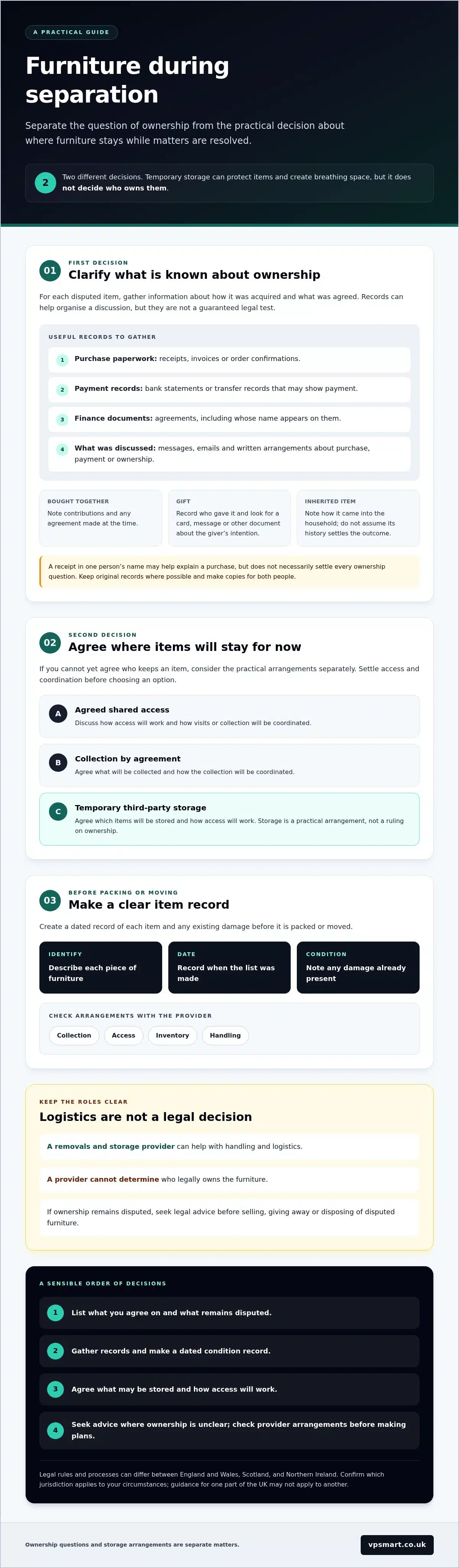
How to document, pack and store furniture safely during a separation
A consistent record helps both parties see what’s being moved, its condition and where it’s going. Before packing starts, make sure the items and handling arrangements have been agreed. An inventory helps clarify the practical process, but it isn’t proof of who owns an item.
Build a shared furniture inventory
Use a shared list that both of you can check. Give each piece a clear description, such as “oak dining table with six chairs”, and add photographs, condition notes and any ownership evidence you’ve collected. Mark disputed items as unresolved rather than recording one person as the owner. Keep a copy accessible to both parties, and note who approved collection and the agreed destination.
Follow a clear preparation checklist
- 1. Agree the scope. Confirm which furniture may be packed or moved, and pause if consent is disputed.
- 2. Photograph each item. Take dated photographs before packing or collection, including close-ups of existing scratches, marks or other damage. Keep the images with the inventory.
- 3. Complete the inventory. Record descriptions, condition, any relevant ownership documents, approval for collection and the destination. Share the latest copy with both parties.
- 4. Prepare items carefully. Where appropriate, clean and dry furniture before wrapping it. Protect vulnerable surfaces and detachable parts, and label components so they can be matched to the right item.
- 5. Confirm storage arrangements. Check the provider’s terms, handling requirements, access arrangements and who can authorise collection. Ask about item-specific requirements before moving delicate, upholstered or wooden furniture.
Photograph furniture again before dismantling or wrapping if those steps could hide its condition. Keep fittings together and labelled, and avoid taking furniture apart unless it’s suitable to dismantle. For a delicate chair, check how its materials should be protected rather than assuming one wrapping method suits every item. Confirm handling or storage requirements with the provider before collection.
These checks support clearer furniture storage during separation uk: both parties can refer to the same item list, images and agreed arrangements. If you’d like practical help with handling, explore movers and packers services from VP Smart Removals. A removals or storage provider can assist with logistics, but can’t determine ownership.
To make the process smoother, you can easily arrange help with furniture handling through VP Smart Removals today.
Choosing a practical next step for furniture storage during separation
A clear sequence can help you move forward without confusing practical arrangements with decisions about ownership:
- Seek agreement on which items may be moved and where they’ll go.
- Document the plan, including item condition, access and who can authorise collection.
- Get legal advice if ownership or consent is disputed, or you’re considering disposal.
- Arrange the logistics once the storage plan is agreed.
A storage provider can move and hold furniture, but can’t decide who owns it. Keeping that boundary clear helps you choose the right support for each part of the process.
What should you ask a storage provider before arranging collection?
Check exactly what the provider can offer rather than assuming collection, inventory preparation, access or particular handling arrangements are included. Ask how access and collection instructions are authorised, and how changes are recorded. Read the current terms to understand responsibilities, including what happens if your plans change. Confirm these details before agreeing to a move, and make sure they match the written plan between you.
VP Smart Removals provides removals, packing and storage for residential customers across the UK. You can review its storage services, then confirm directly which arrangements are available for your furniture and circumstances.
When should you seek legal advice before moving furniture?
Pause for advice if you disagree about ownership, the other person hasn’t consented to moving an item, or either of you is considering selling or disposing of disputed furniture. A family-law solicitor can advise on your individual situation and the relevant jurisdiction. If there are urgent safety concerns or a court-related issue, seek support from an appropriately qualified professional before taking practical steps.
Once you’ve agreed what can be stored, the destination and access arrangements, you can discuss the move with a provider. Keep a copy of the agreement and confirm collection, handling and storage terms directly. This gives both parties a clearer record while the ownership question is addressed separately.
If you have an agreed storage plan, you can explore practical storage options and discuss the arrangements with VP Smart Removals.
Make your next move with a clear plan
Furniture storage during separation uk is easier to organise when ownership discussions and practical arrangements stay separate. Agree what can be moved, keep a shared record of the items and their condition, and get advice from a family-law solicitor if ownership or consent remains uncertain. Storage can protect furniture temporarily, but it doesn’t decide who will eventually keep it.
Once the plan is agreed, VP Smart Removals can support the practical side with UK-wide removals and storage services, plus packing and furniture-handling support. The company offers secure storage facilities. Confirm current collection, access, inventory and handling arrangements directly before booking, so the service fits the plan you’ve made.
A considered next step can ease pressure while decisions are still being resolved. With clear records and agreed logistics, you can focus on moving forward with greater confidence.
Frequently Asked Questions
Who gets the furniture when a couple separates in the UK?
There isn’t a reliable one-size-fits-all answer. Who keeps furniture can depend on the facts, available documents and the applicable UK jurisdiction. Having an item in your home is practical possession, not necessarily proof of ownership. Marriage, paying for an item or using it daily won’t automatically settle every case. Make an inventory of disputed pieces and relevant records, then ask a family-law solicitor familiar with the applicable jurisdiction how they may apply.
Can my ex-partner take furniture from our home without my agreement?
Whether an ex-partner can take furniture without agreement depends on ownership, the circumstances and the applicable law, so don’t rely on a blanket rule. Record the items in question and keep relevant messages, receipts and other documents. Get legal advice before removing or disposing of disputed belongings. If there’s an immediate safety concern, contact emergency services or an appropriate support professional, rather than asking a removal company to resolve it.
Does the person who paid for the furniture automatically own it?
Proof of payment may be relevant, but it doesn’t necessarily settle ownership on its own. The wider circumstances, other records and the rules in the applicable jurisdiction may also matter. Gather receipts, bank statements, finance documents and messages about the purchase or any agreement between you. A family-law solicitor can explain how those facts may apply to your situation. Don’t treat one payment record as a definitive legal test or a guaranteed outcome.
Can we put disputed furniture into storage while we decide who keeps it?
Temporary storage can be a practical option if you both agree what will be moved, how access will work, how costs and instructions will be handled, and what happens if plans change. For furniture storage during separation uk, keep the practical arrangement separate from the ownership decision: storage doesn’t determine who owns an item. Record the furniture and its condition, agree the plan in writing and check the provider’s terms. If consent is disputed, seek legal guidance before moving or disposing of belongings.
How should I document furniture before it goes into storage?
Create a dated inventory with clear descriptions, photographs and notes about each item’s condition, including existing marks or damage. Add any available purchase or gift records, and note who approved collection, where the furniture is going and who may access it. Keep copies available to both parties where appropriate. These records can make practical arrangements clearer, but they don’t independently establish ownership. Ask a family-law solicitor about items that remain disputed before arranging their move.
What should I check before choosing furniture storage during a separation?
Confirm which items will be stored, who can authorise collection, how access works, what handling the provider offers and how changes to instructions are recorded. Check the provider’s current terms and ask about requirements for particular items, such as delicate or upholstered furniture. Put responsibilities and agreed arrangements in writing. If ownership or consent is uncertain, seek legal advice rather than expecting a storage provider to settle the disagreement. The provider can handle logistics, not determine ownership.
Does furniture ownership work the same way across England, Wales, Scotland and Northern Ireland?
No single legal conclusion should be assumed to apply across all four. England and Wales, Scotland, and Northern Ireland are distinct legal jurisdictions, and relevant rules or processes may differ. First establish which jurisdiction applies to your circumstances, then seek current advice from a family-law solicitor qualified to advise there. Check that any legal guidance you rely on is accurate for that jurisdiction and up to date, especially before acting on a disputed item.
Disclaimer
Some links in this article may be affiliate links, which means we may earn a small commission if you make a purchase through them, at no additional cost to you. We only recommend products or services we believe provide value to our readers.