
What if a smaller home gave you more comfort and freedom, but released less money than you expected? That’s the question behind downsizing for retirement pros and cons uk homeowners need to weigh: a sale may unlock equity, yet moving and purchase costs can reduce what’s left. The decision isn’t simply about having fewer rooms. It’s about finding a home that fits your finances, routines and changing needs.
If you’re attached to the home where you’ve built a life, or unsure whether a smaller property will remain comfortable and accessible, it’s sensible to pause before deciding. Downsizing can lower some ongoing costs and make day-to-day living easier, but it can also mean leaving familiar neighbours and surroundings without a worthwhile financial gain.
This guide will help you assess the trade-offs without pressure to move. We’ll look at potential financial benefits and costs, practical questions about space and accessibility, and the emotional impact of leaving a long-time home. You’ll also consider alternatives, so you can compare realistic options against what matters most in your retirement.
Key Takeaways
- Weigh the downsizing for retirement pros and cons uk homeowners face against your own financial, practical and emotional priorities.
- Look beyond the sale price to understand what costs and circumstances could affect the equity you release.
- Compare staying put, adapting your current home and moving to a smaller or more suitable property before viewing homes.
- Check whether a potential home can support your comfort, accessibility and everyday routines as your needs change.
- If you decide to move, confirm your finances, property suitability, legal process and timeline before making commitments.
Downsizing for retirement in the UK: what changes when you move to a smaller home?
Retirement downsizing is a choice to move to a home that better fits your priorities, not a step everyone is expected to take at a certain age. It might mean fewer rooms, less upkeep or a different location. A move could be nearby, keeping familiar routines and support close, rather than taking you far from the people and places you know.
Downsizing means changing your home to suit the life you want; decluttering means letting go of possessions, which you can do without moving. The distinction matters: clearing unused belongings may make your current rooms easier to manage, but it won’t change the property’s layout, ongoing costs or location.
What does downsizing for retirement involve?
Possible choices include a smaller house, flat, bungalow or purpose-built retirement housing. These options differ in layout, maintenance responsibilities and how they support everyday life. Compare the specific property and its terms rather than assuming that fewer rooms automatically mean less work or expense.
Separate the decisions. First, consider whether you want to move at all. Then assess tenure, location and property type: you might remain in your current area, choose a different kind of home, or stay where you are and adapt the space. The UK’s varied housing arrangements provide useful background on the state of the UK housing market, but the right option depends on your circumstances, including finances, health, relationships and preferred routines.
Why do people consider a smaller home after retirement?
Motivations vary. A large garden or several unused rooms may feel like more upkeep than they’re worth; stairs or an awkward layout may become less convenient; or a move may bring family, friends, shops or other familiar support closer. Some people also hope that selling a more valuable home and buying a less expensive one will release equity. Whether it does depends on the full costs and circumstances, not simply the difference in property prices.
These reasons can overlap, but they don’t point to one answer. Someone who wants less maintenance, for example, may find that a different layout works better than simply choosing fewer rooms. Someone who values family visits may prioritise location and space for guests. The question behind downsizing for retirement pros and cons uk is how a possible move fits your priorities, not whether retirement itself makes moving the obvious next step.
There’s no universal retirement timeline. Treat this as a personal assessment of the home and life you want, not an age-based expectation. A smaller property won’t automatically reduce total housing costs or improve quality of life: upkeep, location, layout and suitability for changing needs all matter.
The pros of downsizing for retirement: finances, upkeep and everyday comfort
A move can create more breathing room in your budget or simplify daily routines, but neither result is automatic. The benefit depends on the home you leave, the one you choose and the costs and responsibilities that come with it. For a balanced view of the downsizing for retirement pros and cons uk homeowners may face, test each hoped-for gain against what needs to be true for it to happen.
Could downsizing improve retirement finances?
Selling a higher-value home and buying a less expensive one may release equity. The amount left available depends on the sale proceeds, purchase price, any mortgage to repay, and the costs of selling and buying. Allow for relevant estate agency and legal fees, surveys, removal costs, mortgage charges and any property tax that applies. The rules differ across the UK, so check the position for the nation where you’re buying rather than assuming one set of charges applies everywhere.
There may also be ongoing savings if the new home costs less to heat, insure or maintain. Yet a flat’s service charges, a property in need of work or a more expensive location could offset some of those reductions. If you receive means-tested support, check whether sale proceeds could affect your eligibility before relying on a particular financial outcome. Hamptons discusses these financial and practical considerations; for decisions involving your pension, tax or benefits, seek independent advice suited to your circumstances.
Make a net-proceeds estimate before committing. Start with a realistic sale figure, subtract the purchase price and likely transaction and moving costs, then account for mortgage arrangements and expected changes to regular household expenses. This gives you a clearer basis for judging whether the financial gain is meaningful.
Can a smaller home make daily life easier?
Fewer rooms may mean less cleaning and a simpler maintenance routine. A compact garden, level access or a more convenient layout could reduce everyday effort, whilst a well-placed home may make it easier to reach people and services you rely on. Assess the actual property, not just its floor area.
A smaller home improves comfort only when its layout, location and facilities fit the resident’s needs, routines and plans for the future. Check whether there’s room for hobbies and visitors, whether you can move around comfortably, and how the property’s condition and ongoing charges affect daily life. A spare room for regular family visits may matter more than reducing the amount of space.
If you decide that a move is right, professional packing and moving support can be one practical part of planning the transition.
The cons of downsizing in retirement: costs, space and emotional ties
A smaller home isn’t automatically cheaper, simpler or easier to leave than a larger one. A move can reduce some demands but introduce others, and a property that looks ideal on paper may not suit your everyday life. Weigh each possible gain against what you could lose or take on.
| Potential benefit | Possible drawback to check |
|---|---|
| Less space to clean and maintain | Service charges, repair needs or shared maintenance responsibilities may add costs or obligations. |
| Equity released from the sale | Legal, sale, purchase and moving expenses can reduce the amount left over. |
| A more manageable layout | There may be less room for visitors, hobbies, treasured belongings or future needs. |
| A more convenient location | Moving could make existing friendships, routines or familiar services harder to reach. |
What hidden financial and practical drawbacks should you consider?
Build a complete picture before deciding. Ask which legal, selling and purchase costs apply, whether the property needs repairs, what moving will involve and whether ongoing charges apply. Compare total housing costs, not just floor area or asking price: include expected bills, maintenance responsibilities and any service charges.
Read the relevant property documents carefully. Lease terms, charges and responsibility for repairs can vary, so don’t assume a flat or retirement property will be low-maintenance simply because it’s smaller. Check the home’s condition and clarify which upkeep falls to you. If figures or terms are unclear, ask an appropriate professional to explain them before you commit.
How can leaving a long-time home affect retirement?
A familiar home can hold more than furniture. Its garden, favourite rooms, neighbours and everyday routines may be part of your identity and family history. Leaving can bring grief as well as excitement, particularly if you’ll lose space for visitors or feel less connected to the people and activities that make daily life enjoyable.
Test the practical impact of a new location. Consider how you’d reach friends, healthcare, transport and community activities, and whether those journeys would still feel manageable. Talk through concerns with trusted family or an independent adviser, and give yourself time to reflect before making commitments. The downsizing for retirement pros and cons uk question isn’t settled by comparing room numbers alone; it’s about whether the full change supports your finances, connections and way of life.
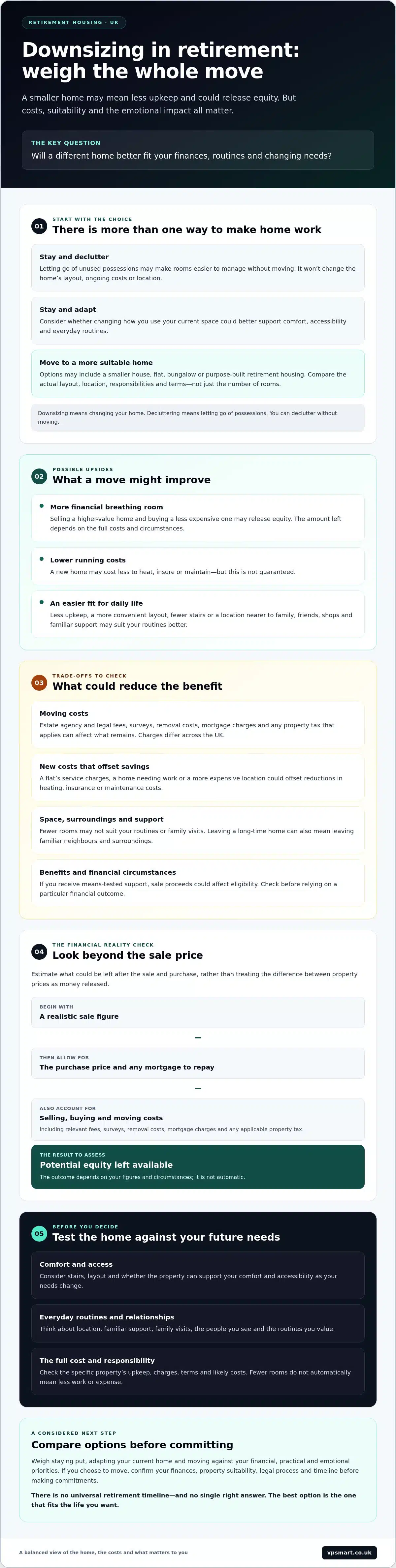
How to decide whether retirement downsizing suits your future needs
Start with the life you want your home to support, not a list of properties to view. A clear set of priorities makes it easier to compare staying, adapting your current home and moving, without assuming one route is automatically best. Use this process to turn broad hopes, such as “less hassle”, into practical requirements.
- 1. Identify what matters most. Note what works well now, what feels difficult and what you’d like to change. Include finances, comfort, independence and the routines that make home feel like home.
- 2. Separate needs from preferences. List non-negotiables, such as manageable access or space for essential belongings, then distinguish these from features you’d enjoy but could live without. Consider how both lists might change over time.
- 3. Picture foreseeable changes. Think about mobility, potential care needs, visitors and the support you may want nearby. Ask whether stairs, bathroom access, transport links and outdoor space would still suit you if your circumstances changed.
- 4. Compare three realistic options. Assess staying as you are, adapting your current home and moving to a smaller or otherwise more suitable property. For each, consider total household finances, accessibility, social connections and the everyday effort involved.
- 5. Check the evidence before committing. Gather relevant financial information, inspect a potential property carefully and seek qualified advice about adaptations or other complex decisions. Give yourself time to discuss the options with people you trust.
Which questions should you ask before deciding to downsize?
Be specific. Is the main challenge maintaining the garden, managing stairs or heating rooms you rarely use? Would a different layout solve the problem, or is being near family and everyday services more important? Consider whether you need room for visitors, hobbies or treasured possessions. These questions help you judge a home by how it functions, not just its size.
What alternatives could make staying at home work?
Decluttering may make rooms easier to use without a move. Targeted adaptations could address particular access needs, whilst maintenance support may help with tasks that have become difficult. Ask relevant qualified professionals to assess whether adaptations are suitable and what they would involve. Then compare these options with moving using the same financial, accessibility and lifestyle priorities.
Choose the option that best meets your foreseeable needs, not simply the smallest home. The right answer may be to stay, make considered changes or move. A useful way to approach the downsizing for retirement pros and cons uk is to test every option against the life you want to lead.
Planning a retirement move: make the next step manageable
If you’ve weighed the trade-offs and decided moving is right for you, a clear plan can make the change feel more manageable. Before committing, check four essentials: your financial position, whether the new property suits your needs, the legal process and a realistic moving timeline. Confirm who is handling each part, and allow time for questions or delays rather than building plans around best-case assumptions.
How can you prepare belongings and plan the move?
Start sorting gradually, one room or category at a time. Label items to keep, pass on, donate or store. This helps you see what will fit in the new home and gives family or friends time to help with decisions, without leaving every choice until moving week.
Make a separate list of belongings that need careful packing or specialist handling, such as fragile keepsakes, valuable items or a piano. Check access at both properties, including stairs, doorways and any restrictions that could affect moving larger furniture. Set aside medicines, important documents, chargers, a kettle and a change of clothes so essentials are easy to find on the first day.
Agree a schedule that allows time for packing, final checks and the handover of keys. If support would make the physical work easier, professional packing services can be considered alongside house removals. The right level of help depends on what you want to manage yourself and what you’d prefer to delegate.
When could removal or storage support be useful?
A removal team may help move belongings and furniture, while packing support can take some preparation off your hands. Check what is included in any service you consider, particularly if furniture needs to be dismantled or items require careful handling. These options can support your plan, but they aren’t a requirement for making the move.
Temporary storage may help if completion dates don’t align, the new home isn’t ready for everything, or you want more time to decide what to keep. Make a list of what needs to be accessible straight away and what can be stored, then check the arrangements and costs before choosing this option.
Keep your plan in one place, with key dates, contact details, tasks and essential belongings. That gives you a simple reference point as moving day approaches, whilst leaving room to adjust if circumstances change.
If you’ve decided that moving is right for you, explore UK house removal support as one practical option for planning the next step.
Choose the home that supports your next chapter
Downsizing isn’t automatically the right move for retirement. The downsizing for retirement pros and cons uk come down to more than sale proceeds or floor space: consider the full financial picture, the practical fit of a new home and what you’d miss about your current one.
Compare moving with staying put or adapting your home, using your future accessibility, finances and daily routines as your guide. If you decide to move, confirm the property, costs, legal process and timing before making commitments. Sorting belongings in stages can also make it easier to decide what to keep, pass on or store.
Should you choose to move, VP Smart Removals provides house removals across the UK, with optional packing and storage services. Furniture disassembly and specialist handling, including for delicate items such as pianos, are also available.
Take the time you need. The right decision is the one that makes your next home feel comfortable, manageable and genuinely suited to the life you want.
Frequently Asked Questions
Is downsizing a good idea when you retire?
It can be a good idea if a different home better suits your finances, access needs and daily routines, but retirement alone isn’t a reason to move. Consider what you’d gain, such as less upkeep, alongside possible costs and the emotional effect of leaving a familiar home. The right choice may be moving, adapting your current property or staying as you are. Compare each option against the life you want to lead.
What are the disadvantages of downsizing in retirement?
Downsizing can involve selling, legal, purchase and moving costs, which may reduce the equity left over. You could also lose useful space for visitors, hobbies or belongings, along with a familiar garden, neighbours and routines. A smaller property may bring new responsibilities or charges, too. In weighing the downsizing for retirement pros and cons uk homeowners face, look beyond room numbers and consider the full financial and personal impact of the move.
Can downsizing release equity for retirement?
Yes, selling your current home and buying a less expensive one may release equity, but the amount depends on the sale proceeds, purchase price, mortgage arrangements and costs involved. Make an estimate that accounts for relevant legal, sale, purchase and moving expenses before relying on the money. If releasing equity could affect your pension, tax or benefits, seek independent advice based on your circumstances before deciding.
Will downsizing reduce my bills in retirement?
It might, but lower bills aren’t guaranteed. A smaller home may cost less to heat or maintain, yet its location, condition, insurance and ongoing charges can change the overall household budget. Compare the likely costs of both properties, including energy, council tax, maintenance and any service charges that apply. Focus on total ongoing housing costs rather than assuming that fewer rooms automatically mean cheaper bills.
When should you downsize for retirement?
There’s no set age or single ideal time to downsize. Consider a move when your current home no longer fits your priorities, or while you have time to plan carefully, but don’t feel obliged to move just because you’ve retired. Before committing, check your finances, future accessibility needs, support network and property options. Allow time to compare moving with adapting your current home, and make the decision at a pace that feels right.
Is it better to downsize or adapt your home in retirement?
Neither option is automatically better. Adapting your home may preserve familiar surroundings and relationships, while downsizing could offer a more suitable layout or reduce some upkeep. Compare both against the same needs: access, finances, maintenance, transport, social connections and room for your routines. Ask relevant qualified professionals to assess proposed adaptations and their costs. If changes won’t make your home workable, moving may be worth considering; otherwise, staying could suit you well.
Disclaimer
Some links in this article may be affiliate links, which means we may earn a small commission if you make a purchase through them, at no additional cost to you. We only recommend products or services we believe provide value to our readers.