
Furniture that looks manageable in a room can take up more space in a removals vehicle than you expect. An online furniture volume calculator uk gives you a useful starting estimate, provided you measure consistently and understand what the result leaves out. Bulky sofas, wardrobes and awkwardly shaped pieces can be difficult to measure, and a calculator may not include boxes, packing materials or access constraints.
A clear estimate can help you prepare before discussing your move. This guide explains how to measure furniture, convert dimensions into cubic metres and use an online calculator to build a practical inventory. You’ll also learn how to record difficult-to-measure items, account for packing and furniture disassembly, and distinguish an initial volume estimate from a complete removals assessment. Treat the result as a planning aid, not a final measure of the space your move requires. An organised inventory helps you ask informed questions and gives a removals team useful details for planning, whether you provide a list or arrange a site survey.
Key Takeaways
- Use an online furniture volume calculator uk as a planning aid, and check which items and assumptions its estimate includes.
- Measure each piece at its greatest outer length, width and height, including fixed protruding parts, then record dimensions consistently.
- Compare calculator methods carefully: item-by-item measurements, preset furniture lists and room-based estimates may produce different totals.
- Build a fuller inventory by noting boxes, outdoor and stored belongings, plus fragile, heavy or specialist items and furniture that needs dismantling.
- Check uncertain measurements and share your inventory with a removal company. A professional discussion or site survey can help clarify complex moves.
What an online furniture volume calculator UK estimate tells you
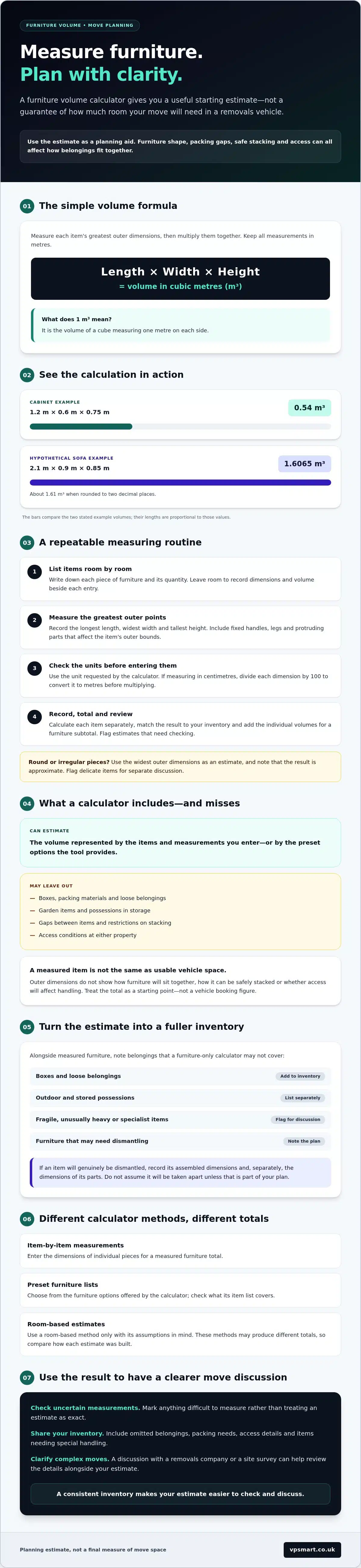
A furniture volume calculator estimates the space represented by the outside dimensions of the items you enter, usually in cubic metres (m³). It provides a consistent way to total measured furniture for move planning, but it cannot guarantee how much room your belongings will need in a removals vehicle. The measured volume of an item is not the same as the usable space required once everything is loaded and arranged.
Use the result as a starting point, not as a vehicle booking figure. Furniture shapes, packing gaps, safe stacking and access can all affect how items fit together. A wardrobe’s dimensions describe its outer bounds, for example, but do not show how it will sit alongside a sofa or whether a doorway will affect handling.
What does cubic metre mean when measuring furniture?
A cubic metre (m³) is the volume of a cube measuring one metre on each side. To estimate an item’s volume, multiply its length by its width by its height, with all three measurements in metres. For example, a cabinet measuring 1.2 m by 0.6 m by 0.75 m has an estimated volume of 0.54 m³.
If you measure in centimetres, convert each dimension to metres before multiplying by dividing each measurement by 100. For a 120 cm by 60 cm by 75 cm cabinet, that gives 1.2 × 0.6 × 0.75 = 0.54 m³. Keeping units consistent prevents a misleading total.
What an online furniture calculator can and cannot include
An online furniture volume calculator uk can only use the items and measurements you provide, or the preset options offered by the tool. A furniture-only result may leave out boxes, loose belongings, garden items and possessions in storage. Check the tool’s item list before treating its total as the volume of your whole move.
Even a detailed estimate has limits. A calculator may not account for gaps between items, restrictions on stacking or access conditions at either property. These affect loading and handling, not just the dimensions of each object. Add omitted belongings to a separate inventory and flag anything difficult to measure, fragile, unusually heavy or requiring specialist handling. A removals company can then discuss these details alongside your estimate, packing needs and any furniture disassembly.
How to measure furniture and calculate its volume accurately
A reliable estimate starts with a tidy inventory and repeatable measurements. Work room by room, label each item clearly and use the same unit throughout. Measure the item’s outer bounds, including fixed parts that affect how much space it occupies. This gives an online furniture volume calculator UK consistent information to process and makes your results easier to check.
- Prepare an inventory. List furniture by room, noting each item and quantity. Leave space beside each entry for dimensions and volume.
- Measure each item. Record its greatest outer length, width and height, including fixed handles, legs or protruding parts.
- Calculate the volume. Check the calculator’s required unit, then enter each item’s measurements separately.
- Record and review. Write the result against the matching inventory entry, then add the individual volumes for a furniture subtotal. Flag estimates that need checking.
Which dimensions should you record for each item?
Measure the longest point, widest point and tallest point of sofas, wardrobes, tables and appliances. Include fixed legs or handles if they extend beyond the main body. If an item will genuinely be dismantled, record its assembled dimensions and, separately, the dimensions of its parts for the move. Don’t assume it will be taken apart unless that is part of your plan.
How should you enter measurements into a volume calculator?
First check whether the tool asks for centimetres, millimetres or metres. Mixing units can distort the result. For a quick refresher on the box method, see how to calculate the volume. For round or irregular pieces, use the widest outer dimensions as an estimate and note that the result is approximate. Mark delicate items for separate discussion rather than presenting a rectangular calculation as exact.
Example: Imagine a hypothetical sofa measuring 210 cm long, 90 cm wide and 85 cm high. Convert each measurement to metres: 2.1 × 0.9 × 0.85 = 1.6065 m³, or about 1.61 m³ when rounded to two decimal places. Calculate each item separately before adding the results. Keep the unrounded figures in your inventory if you want to reduce rounding differences in the subtotal.
Use the finished list as a planning document, not just a calculator record. Add notes about furniture disassembly, packing and anything that is difficult to measure. These details help inform a removals discussion. If you’d like support reviewing a move inventory, explore VP Smart Removals’ movers and packers service.
Furniture volume calculator UK results: compare estimates and check limitations
Two calculators can produce different totals from the same move without either making an arithmetic mistake. An item-by-item tool uses the dimensions you enter, while a preset furniture list may assign standard dimensions to categories such as sofas or wardrobes. A room-based estimate may use the number or type of rooms instead of measurements, so its result depends on the assumptions built into that method.
Why can two online calculators give different results?
Check what each tool counts before comparing its total. One might include appliances or outdoor furniture, while another focuses on indoor furniture. Preset dimensions, rounding rules and unit requirements can also vary. A room-based estimate relies on assumptions about what a room contains, which may not match your measured inventory. Review each calculator’s instructions, item list and units first. A difference in totals may reflect different inputs rather than a meaningful change in the volume of your belongings.
For a useful comparison, keep a small record alongside your inventory. Include:
- Item: for example, a two-seat sofa.
- Dimensions: the measurements entered, with units.
- Calculated volume: the result from the tool.
- Measurement confidence: note whether the dimensions were measured directly, estimated or selected from a preset list.
This makes it easier to spot a missing item or an assumed dimension. If totals differ, compare the entries rather than automatically choosing the larger or smaller result. An online furniture volume calculator uk is most useful when you understand what its total represents.
Does furniture volume equal the space a removal vehicle needs?
No. Adding the measured volumes of individual items does not show how efficiently they can be arranged together. Protective wrapping can increase the space an item occupies, gaps may remain between irregular shapes, and stacking limits can affect how belongings are loaded. Access at the property can also influence the practical loading plan.
Calculated item volume describes the dimensions entered; assessed vehicle-space requirements account for how belongings can be protected, carried and arranged.
Use calculator results as a planning reference, then share your item list and any uncertain measurements during a removals discussion. A detailed inventory or site survey can help clarify what a calculator alone cannot assess, particularly if your belongings are varied or access may affect handling.
How to turn your furniture volume estimate into a complete move inventory
A furniture total is only one part of the move. Use your online furniture volume calculator UK result as a starting point, then expand the list to cover belongings the calculator may not ask about. A clear inventory helps a removals company understand what is travelling, what needs extra care and which details still need checking.
What belongs on a household moving inventory?
Group items by room so you can review the list against your home. Start with larger furniture, then add smaller belongings and packed boxes. Include outdoor items, loft or shed contents, and anything held in storage. Record storage-bound belongings separately from items going to your new home, so the two parts of the move are easy to distinguish.
Add practical notes beside each item rather than trying to express every requirement as a volume. Identify furniture that needs dismantling and reassembly, fragile belongings that need careful packing, unusually heavy pieces and items requiring specialist handling. If you need packing and moving services, these notes can help you discuss the support that may be appropriate.
Keep access details in a separate section of the inventory. Note relevant information about entrances, stairs, lifts, parking or restricted routes at both addresses. These details can affect handling and planning, but they are not measurements of the belongings’ volume.
How can you use the estimate when requesting a removals quote?
Share the inventory and calculator total, making clear which dimensions or box counts are estimates. Point out anything you could not measure confidently, along with packing needs and furniture disassembly. This gives the removals team a fuller picture than a volume figure alone and makes it easier to identify what still needs clarification.
Ask whether a site survey or more detail would help assess your move, particularly if the inventory is complex, access is restricted or some items need specialist handling. VP Smart Removals can use a detailed inventory or site survey when planning a relocation. You can also review the company’s removals pricing information as part of preparing for that conversation.
Once your inventory is organised, share it with a team that can help plan your house move.
Discuss house removals planning
Next steps after using a furniture volume calculator UK
Your estimate is a useful starting point for organising a move, not a final assessment of the space or service required. Before sharing it, check the list against each room and add anything the calculator may have missed, such as boxes, outdoor belongings or items in storage. Recheck dimensions that were guessed, confirm the calculator’s units and mark uncertain entries clearly.
Keep practical details alongside the volume total. Note which items are fragile, awkward to carry, unusually heavy or likely to need specialist handling. Record relevant access information for both properties, such as stairs or restricted routes, separately from measurements. This gives a removals provider a clearer basis for discussing your move.
When is a calculator estimate enough to start planning?
An early estimate can help you organise belongings, identify what still needs measuring and prepare useful questions for a removals provider. It is less conclusive if your inventory includes awkward furniture, delicate possessions or items requiring specialist handling. A calculator alone cannot confirm vehicle suitability, assess access or provide a final removals quote. Treat the total as a guide to discuss, not a promise of the space needed.
How can a removals team help refine your inventory?
A professional discussion can add context that a volume figure cannot capture. Share your inventory and explain which measurements or item counts are estimates. Ask whether a site survey or more detail would help assess the move, particularly if access is complicated or the inventory includes items that need extra care.
VP Smart Removals can use a detailed inventory or site survey when planning house removals. If they suit your move, mention packing requirements, furniture that may need disassembly and reassembly, or belongings that need storage. These details support a more informed discussion without assuming that the calculator’s total tells the whole story.
Have your inventory ready? Discuss your house move with VP Smart Removals.
Turn your estimate into a confident moving plan
An online furniture volume calculator uk can help you organise measured furniture, but its result is only a starting estimate. Check the dimensions, include belongings the calculator may leave out and mark uncertain measurements clearly. A complete inventory gives a removals team more useful context than a volume total alone.
If your move includes fragile or awkward items, restricted access, packing requirements or furniture that needs disassembly, raise these details when discussing your plans. VP Smart Removals can use a detailed inventory or site survey to help plan residential removals, with packing services and furniture disassembly and reassembly available where they suit your needs.
With your belongings organised and the right details ready to share, you can take the next step towards a more considered move.
Frequently Asked Questions
How do I calculate the volume of furniture for a house move?
List each large item, measure its outer length, width and height, then multiply the three dimensions to estimate its volume. Keep measurements in the same unit, converting them where needed so your result is in cubic metres. Add individual results for a furniture subtotal, but record boxes and other belongings separately. Use the total as a planning estimate, not a guarantee of the space a removal vehicle will need.
What measurements do I need for an online furniture volume calculator?
Most tools ask for each item’s length, width and height, but check the calculator’s instructions because input units vary. Measure the greatest outer points, including fixed parts that extend beyond the main body. If furniture will be dismantled, note its assembled dimensions and the realistic size of the parts being moved. Mark uncertain measurements in your inventory so you can check them before relying on the estimate.
Can a furniture volume calculator include moving boxes and other belongings?
Some calculators include boxes or wider household categories, whilst others list furniture only. Check the available options and record anything missing separately. Include packed boxes, loose belongings, outdoor items and possessions going into storage if they are part of the move. Keeping furniture and non-furniture totals distinct makes your inventory easier to review and helps you spot omissions before sharing it with a removals provider.
Is an online furniture volume calculator accurate enough for a removal quote?
An online furniture volume calculator UK can provide a useful starting estimate if you enter complete, careful measurements. However, tools may differ in their item lists, preset dimensions and rounding. A calculator also cannot assess loading gaps, access or handling needs. Share your inventory and identify uncertain measurements when discussing your move. The removals provider may ask for more detail or a site survey before confirming its plan or quote.
How much space does a three-bedroom house move need?
There is no single volume that reliably fits every three-bedroom home. The amount depends on the furniture and belongings you are taking, what needs packing, and whether some items are going into storage. Rather than relying on a general figure, list your belongings and measure larger pieces consistently. Treat the result as an initial guide, then ask a removals provider whether your inventory needs more detail or a site survey.
What happens if I underestimate my furniture volume?
An incomplete estimate may mean the move plan needs to be reviewed, especially if you have missed large furniture, boxes or specialist items. Check each room, add belongings the calculator did not cover and flag measurements you are unsure about. Share the updated inventory with your removals provider before confirming arrangements, and ask whether the new details affect the plan. An online result alone cannot guarantee that a particular vehicle will be suitable.
Do I need to include dismantled furniture in a volume calculator?
Include every item you are moving, and note whether it will travel assembled or dismantled. If it is genuinely being taken apart, record its assembled size and the dimensions of parts that remain bulky or need careful handling. Dismantling does not necessarily remove all the space an item needs. Tell your removals provider what needs taking apart and whether reassembly is required, so those tasks can be considered in the move plan.
Disclaimer
Some links in this article may be affiliate links, which means we may earn a small commission if you make a purchase through them, at no additional cost to you. We only recommend products or services we believe provide value to our readers.