
A house move as a single parent works best when the plan is built around your children and daily routine, not an idealised packing schedule. If you’re wondering how to manage a house move as a single parent while balancing work, childcare and a long list of jobs, start with the tasks that have firm deadlines. You don’t have to handle every job yourself.
It’s understandable to worry about children feeling unsettled or about asking friends and family for help when they have their own commitments. A clear sequence can make the move more manageable, while familiar routines can give children a sense of security amid the change.
This guide covers practical priorities for the weeks before moving day, ways to keep children safe and occupied, and how to decide which tasks to share or delegate. You’ll also find out when professional house removals, packing services or storage may help, particularly if your moving dates and household plans don’t line up. The aim is a calmer transition, with you in control of the decisions that matter most.
Key Takeaways
- Learn how to manage a house move as a single parent by prioritising childcare, work and important dates.
- Work backwards from moving day to build a practical schedule, including time to prepare an essentials bag.
- Compare self-packing, help from people you trust and professional packing services to find a workable balance.
- Agree who will supervise your children and keep important belongings accessible on moving day.
- Delegate specific tasks, share practical details clearly and settle into your new home at a pace that works for your family.
How to manage a house move as a single parent without doing everything at once
Co-ordinating a move alongside parenting, work and everyday household jobs can feel like several full-time tasks competing for the same hours. If you’re working out how to manage a house move as a single parent, success doesn’t mean having every cupboard perfectly sorted. It means knowing what must happen, keeping essential belongings and routines in view, and arranging enough support to make moving day manageable.
There’s no single template for family life or the help available. Build your plan around your child’s needs, working hours, key dates and the support you can realistically access. Focus on decisions that make the move safer and easier for your family, rather than comparing your situation with anyone else’s.
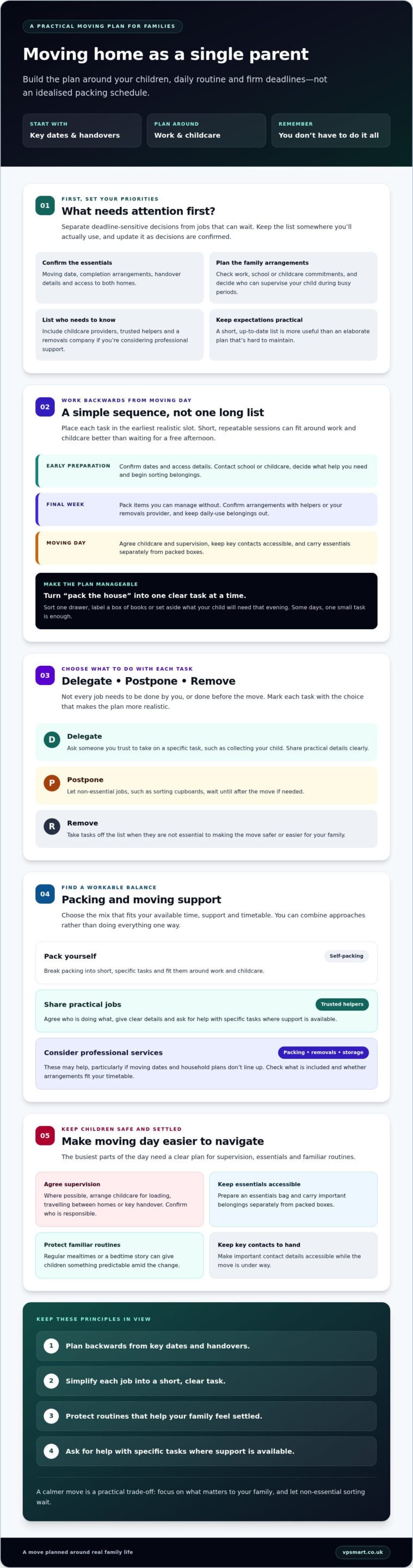
Which moving tasks should a single parent prioritise first?
Separate deadline-sensitive decisions from jobs that would be useful but can wait. Confirm the moving date and key handover arrangements, check what affects access to either home, and decide who will care for your child during the busiest parts of the day. Then list anyone you need to contact, such as childcare providers, trusted helpers or a removals company if you’re considering professional support.
Keep your list somewhere you’ll actually use it, such as a notebook, calendar or notes app. Record confirmed decisions and dates, then add smaller jobs as you have time. A short list you keep up to date is more useful than an elaborate plan that’s difficult to maintain.
How can you make a move feel manageable for your family?
Turn broad jobs such as “pack the house” into short, specific tasks: sort one drawer, label a box of books or set aside what your child will need that evening. Fit these jobs around work and childcare instead of relying on long, uninterrupted stretches. Some days, one small task will be enough.
Keep a few familiar routines where possible, such as regular mealtimes or a bedtime story. They can give children something predictable amid the change, even if the rest of the day looks different. Adjust your expectations too: the home may be untidy, and non-essential sorting may need to wait. That’s a practical trade-off, not a failed move.
Keep four principles in view:
- Plan backwards from key dates and handovers.
- Simplify each job into a short, clear task.
- Protect routines that help your family feel settled.
- Ask for help with specific tasks where support is available.
Build a single-parent moving plan around childcare, work and key dates
A useful moving plan connects the dates that cannot shift with the time and support you actually have. Confirm the move date, completion arrangements and key handover details with the relevant people. Then check how these fit around work, school or childcare, and identify any periods when you’ll need another adult’s help. This turns a large job into a sequence of decisions rather than one long list of pressure.
Include your family’s needs from the outset. Note routines or practical arrangements that may help your child feel settled, alongside your work commitments and available time. A realistic schedule should support both the move and your household, with room to adjust if arrangements change.
How do you organise moving tasks when you have limited time?
Build a simple timeline around three phases. Work backwards from the handover and moving date, then place each task in the earliest realistic slot. Use a paper calendar, phone notes or a spreadsheet, whichever you’ll keep checking. Short, repeatable sessions are more practical than waiting for a free afternoon that may not arrive.
- Early preparation: confirm dates and access details, contact school or childcare, decide what help you need, and begin sorting belongings.
- Final week: pack items you can manage without, confirm arrangements with helpers or your removals provider, and keep daily-use belongings out.
- Moving day: agree childcare and supervision, keep key contacts accessible, and carry essentials separately from packed boxes.
Mark each task as delegate, postpone or remove. A trusted person might collect your child, for instance, while non-essential cupboards can wait until after the move. If you’re considering help with packing or transport, check what’s included and whether the arrangements fit your timetable.
What should you arrange for children before moving day?
Where possible, arrange childcare for the busiest periods, such as loading, travelling between homes or key handover. Confirm who is responsible, where your child will be and how you’ll stay in touch. If childcare isn’t available, plan how to keep your child close and supervised, away from busy access points and lifting areas.
Pack a separate bag with familiar comfort items, snacks, a change of clothes, any regular medicines and the essentials for the day. Explain the move in a way that suits your child’s age and temperament. Some children may want clear details, while others need time to ask questions. Keep your timeline simple and leave room to adjust as dates, work and childcare arrangements become clearer.
Compare packing and moving support with doing everything yourself
There’s no single right way to organise a move. Packing everything yourself gives you control over what goes into each box and can make it easier to fit jobs around work and childcare. The trade-off is the time and physical effort, often spread across evenings when you may already be tired.
Friends or family you trust may be able to take on specific jobs, such as packing books, watching your child or helping sort belongings. Agree what they can realistically do and when, rather than relying on vague offers. Professional packing or removals support is another option if it would free you to focus on childcare, key decisions or work. The right mix depends on your budget, available help, belongings and energy. Paid help isn’t essential for every move.
Which moving jobs can you delegate or simplify?
Choose tasks that reduce pressure without creating extra co-ordination. You could ask someone you trust to pack clearly labelled, non-essential items, or arrange professional packing for selected belongings. Before agreeing, clarify what’s included and how the items should be handled. If you’re comparing professional help, this packing and moving service is one option to consider.
Decluttering can reduce the amount you need to pack, but only if sorting is manageable. Start with obvious decisions, such as unused duplicates, instead of turning every possession into a new project. If a task takes more time and energy than it saves, postpone it.
When might temporary storage make a move easier?
Storage may help if your new home isn’t ready for everything, or if the move-out and move-in dates don’t align. It can create breathing space, but you’ll need to decide what goes into storage, how long you may need it and when you’ll retrieve it. Keep everyday essentials and anything your child relies on accessible.
Before choosing storage, check access arrangements, the expected duration, handling responsibilities and how your belongings will be protected. Make a simple inventory and label boxes clearly, so you can identify what you need without searching through everything. Compare the storage arrangements with your moving dates and practical needs before committing. The aim is to reduce pressure, not add another complicated step.
When working out how to manage a house move as a single parent, think about capacity: what can you comfortably manage yourself, what can someone reliably take on, and what could wait? That balance may change as dates and family needs become clearer, so keep the plan flexible.
Make moving day safer and calmer for you and your children
Moving day can bring unfamiliar people, open doors and busy walkways into your family’s space. Decide in advance who is responsible for your child during loading, handover and travel. If a trusted adult is helping, agree when they’ll take charge and how you’ll stay in contact. If you’re the only adult available, plan where your child can stay safely while you manage essential decisions, away from lifting and access routes.
Keep a small essentials bag with you rather than loading it onto the removals vehicle. You’ll be able to reach what your family needs without searching through boxes. A clear sequence also helps: check the bag and key documents, confirm supervision, keep essential items with you, then do a final check of the property before leaving.
What should go in a family moving-day essentials bag?
Pack for the day and the first part of your arrival, not every possible eventuality. Include essential documents, your phone and charger, keys, snacks, water, spare clothing, toiletries and familiar items your child may want close by. Add daily necessities that would be difficult to replace quickly. Keep medication accessible and follow the relevant medical advice for storing and using it.
If your child has particular routines or needs, tailor the bag accordingly. A favourite book, comfort item or familiar cup may help make an unfamiliar setting feel more reassuring. Keep the bag somewhere easy to reach, and tell any helper where it is.
How can you protect children’s routines during the move?
Keep familiar touchpoints where circumstances allow: a usual snack, a rest break or a bedtime item ready for the first night. Explain what will happen in simple, age-appropriate language, such as who will be there and what happens after the boxes arrive. Children respond differently, so make room for questions without expecting them to feel a particular way.
Be honest about what may change. Instead of promising an exact arrival time or that a bedroom will be ready straight away, describe the next step you know for certain. Once you arrive, unpack a few essentials first and let the rest wait. A broader house-move plan can help you keep key tasks and practical decisions in view.
For how to manage a house move as a single parent, calm comes from clear supervision and keeping essentials close, not from making the day run perfectly. If plans shift, return to the next practical priority and adjust around your child’s needs.
Choose the right help and settle into your new home at your own pace
Once you’re in the new home, decide what needs attention first and what can wait. You don’t have to unpack every box straight away. Focus on getting essential rooms and routines working, then make a realistic plan for the remaining jobs.
How do you decide whether to hire professional movers?
Consider the time you have, how much lifting is involved, the size of the move and whether people you trust can offer practical help. You might manage the packing but need support moving heavier belongings, or prefer to delegate more if work and childcare leave little time. Neither choice is automatically right for every family.
If you’re comparing professional house removals, ask what the service includes and discuss access at both homes, timing, belongings that need special handling and any arrangements that could affect the move. Clear details help you compare options and plan your own responsibilities. For broader information, see this house removals guide.
What should you unpack first after moving with children?
Make the first evening more comfortable by setting up somewhere to sleep, unpacking essential toiletries and finding the items your family uses every day. Keep familiar bedding, night-time comfort items and frequently used kitchen or school essentials easy to reach. That gives everyone a workable base, even if the rest of the home is still full of boxes.
Unpack in stages instead of treating every box as urgent. Tackle one essential area at a time, then give your child a chance to explore the new home and become familiar with its rooms. A steady routine, such as a familiar meal or bedtime activity, can help the space feel more settled without requiring everything to be in place.
Learning how to manage a house move as a single parent includes deciding where your time and energy will make the greatest difference. Ask trusted people for specific help if they’re available, and consider professional support for tasks that are physically demanding or difficult to fit around family life. Keep communication clear and adjust your plan as you see what the new home needs.
Explore professional house removal support
Take the next step towards a calmer move
Learning how to manage a house move as a single parent starts with a realistic plan, not a perfect one. Work backwards from key dates, fit tasks around childcare and work, and keep your child’s essentials and supervision arrangements at the centre of moving day.
Choose support based on what would genuinely ease the pressure. Trusted people may be able to help with specific jobs, while professional packing or house removals can take practical tasks off your list. After you arrive, focus first on familiar routines and the spaces your family needs most. The rest can wait.
VP Smart Removals provides house removals, packing services and storage across the UK. These services may be worth considering if additional support would make your move more manageable.
You don’t have to do everything at once. A few clear priorities and help suited to your circumstances can make the next chapter easier to begin.
Frequently Asked Questions
How do you move house as a single parent with no help?
Simplify the plan and focus on essential tasks first. Confirm key dates, keep a short checklist, pack a little at a time and postpone jobs that don’t affect moving day. If you have no personal help, consider whether professional house removals or packing services could cover tasks that are difficult to manage alone. Arrange suitable childcare for busy periods where possible, and keep your child’s essentials with you.
How can I prepare my child for moving house?
Talk about the move in simple, age-appropriate language and explain what you know about the next steps. A younger child may benefit from seeing a familiar toy packed last, while an older child might like to choose what goes in their essentials bag. Make space for questions, and avoid expecting a particular reaction. Familiar routines and honest explanations can help, even if your child needs time to adjust.
What should I pack first when moving with children?
Pack items your family won’t need before moving day, such as out-of-season clothes, books or rarely used kitchenware. Leave daily necessities accessible, then prepare a separate bag with toiletries, medicines, chargers, snacks, spare clothes and familiar items for your child. Label boxes clearly by room and contents, so you can find what you need without opening several boxes. Keep important documents and keys with you rather than packing them away.
How do I keep children safe on moving day?
Agree who is responsible for supervising your children during loading, travel and key handover. If a trusted adult is available, confirm where your child will be and how you’ll stay in contact. Otherwise, arrange childcare for the busiest periods where possible. Keep children away from active loading areas, open access routes and heavy belongings, and make sure their essentials are within reach. Adjust your plan if timings or arrangements change.
Should I hire a removal company as a single parent?
It depends on your available time, the physical demands of the move, your budget and the support you can rely on. Professional help isn’t essential, but house removals or packing services may take practical tasks off your hands. Ask what the service includes, how access and timing will be handled, and how any special belongings should be prepared. VP Smart Removals provides house removals, packing services and storage across the UK.
How can I make moving house less stressful for my family?
Keep the plan realistic: work backwards from important dates, break packing into manageable tasks and protect a few familiar routines. On moving day, agree who is supervising the children and keep medication, documents and comfort items accessible. At the new home, unpack sleeping essentials and everyday items first; the rest can wait. To work out how to manage a house move as a single parent, focus on the next useful step, not a perfect move.
Disclaimer
Some links in this article may be affiliate links, which means we may earn a small commission if you make a purchase through them, at no additional cost to you. We only recommend products or services we believe provide value to our readers.