
Your favourite armchair isn’t just a seat; it’s a complex logistical asset that requires a strategic transit plan to survive a relocation unscathed. Most people view moving as a simple act of transport, but the reality is that your furniture represents the largest variable in your moving budget and your post-move comfort. It’s completely natural to feel a sense of dread when you look at a heavy sideboard and wonder if it will actually fit through your new front door. Deciding what to do with furniture when moving house often feels like a choice between sentimental guilt and physical exhaustion.
We believe that complete oversight of your inventory is the only way to ensure a seamless transition to your new lifestyle. This guide provides a professional framework to help you audit your belongings with technical precision. You’ll learn how to manage disassembly without losing vital hardware, how to protect delicate finishes during transit, and how to ethically rehome items that no longer serve your space. By the end of this article, you’ll have a clear, actionable programme for every piece of furniture you own, ensuring your new home feels like a sanctuary from the moment you step inside.
Key Takeaways
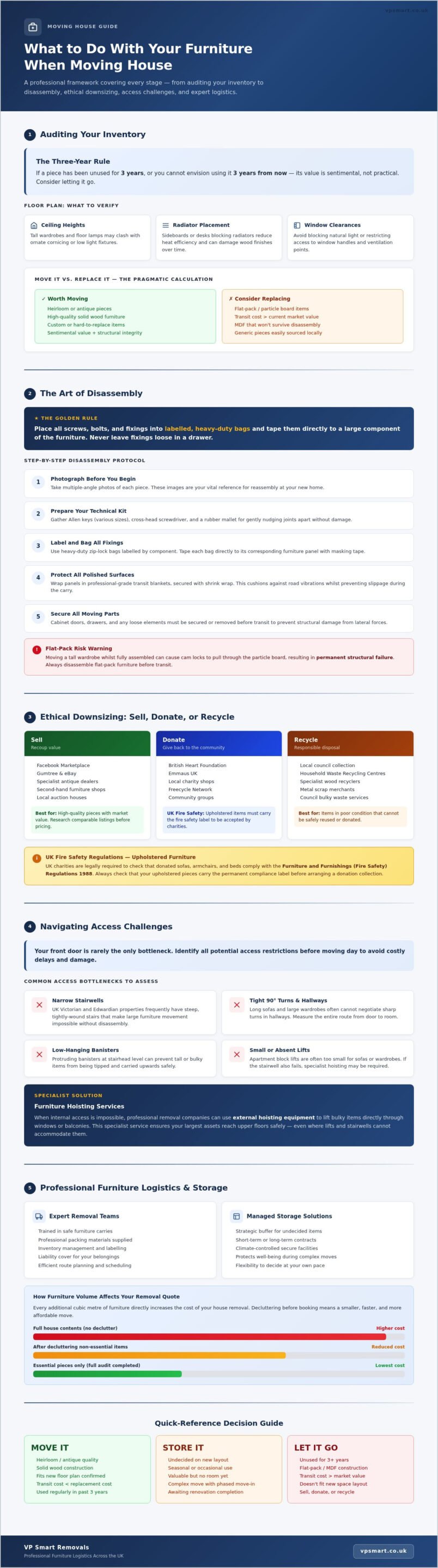
- Learn how to conduct a room-by-room audit using the “Three-Year Rule” to decide which pieces deserve a place in your new layout.
- Discover exactly what to do with furniture when moving house by navigating UK fire safety regulations for ethical donations and high-value resale.
- Master the technical art of furniture disassembly, including the golden rule for organising fixings to ensure a stress-free reassembly.
- Identify potential access bottlenecks like narrow stairwells early and learn how specialised hoisting services can move bulky items where lifts cannot.
- Understand how to use managed storage as a strategic buffer for undecided items, protecting your domestic well-being during a complex transition.
Auditing Your Inventory: Deciding What Earns a Place in Your New Home
A successful relocation begins with a rigorous audit of every item you own. This isn’t just about decluttering; it’s about exercising complete oversight of your future environment. When deciding what to do with furniture when moving house, you must evaluate each piece based on its future utility rather than its past service. We recommend a room-by-room assessment that prioritises both structural integrity and spatial logic. This proactive approach ensures you only invest in moving items that truly enhance your daily life.
The “Three-Year Rule” serves as an excellent emotional filter during this process. If a piece of furniture has remained in storage for three years, or if you cannot realistically envision it functioning in your lifestyle three years from now, its value is likely sentimental rather than practical. Additionally, inspect your flat-pack items with a critical eye. Particle board and MDF often lose structural stability once disassembled, so determine if a budget wardrobe will survive the transition before committing to its transport. It’s often more efficient to replace these items than to risk them failing mid-move.
The Floor Plan Assessment
Visualising your new layout is essential for preventing “furniture shock” on moving day. UK property dimensions vary significantly, and a sofa that feels proportionate in a modern open-plan space may overwhelm a period cottage. Use a floor plan to map out your primary pieces, paying close attention to potential overcrowding. You should also verify specific vertical clearances, including:
- Ceiling Heights: This is essential for tall wardrobes or floor lamps that might interfere with light fixtures or ornate cornicing.
- Radiator Placement: Ensure your sideboard or desk doesn’t block heat sources, which can reduce efficiency and damage wood finishes.
- Window Clearances: Avoid obscuring natural light or restricting access to window handles and vents.
The Cost-Benefit of Moving vs. Buying New
Every cubic metre of furniture impacts your house removals quote. It’s a pragmatic calculation: if the cost of professional transit exceeds the current market value of a generic item, it’s often more logical to sell it and purchase a replacement at your destination. However, heirloom pieces or high-quality solid wood furniture deserve the investment of expert handling because they are difficult to replicate. Measuring access points is the final technical hurdle in this audit. Remember that your front door is rarely the only bottleneck. Instead, focus on narrow hallways, tight ninety-degree turns, and low-hanging banisters that could impede the progress of your largest assets.
The Art of Disassembly: Preparing Bulky Furniture for Safe Transit
Once you have completed your inventory audit, the technical phase of preparation begins. Disassembling large items is often the only way to ensure they navigate narrow hallways without sustaining or causing damage. When considering what to do with furniture when moving house, many homeowners overlook the structural risks of moving fully assembled flat-pack items. These pieces are designed for static use, not for the lateral forces experienced during transit. Moving a tall wardrobe whole can cause the cam locks to pull through the particle board, leading to permanent structural failure.
The golden rule for a successful reassembly is the systematic management of fixings. Never leave screws or bolts loose in a drawer. Instead, place all hardware into labelled, heavy-duty bags and secure them directly to a large component of the furniture with masking tape. This ensures that when you arrive at your new home, you have complete oversight of every nut and bolt. To protect polished surfaces, use professional-grade transit blankets secured with shrink wrap. This creates a cushioned barrier against the vibrations of the road whilst preventing the blankets from slipping during the carry.
Step-by-Step Disassembly Protocol
Efficiency relies on a clear methodology. Start by photographing the item from multiple angles before you begin; these images serve as a vital reference for the reassembly phase. Ensure you have a technical kit ready, including various sizes of Allen keys, a cross-head screwdriver, and a rubber mallet for gently nudging joints apart. Secure any moving parts, such as cabinet doors or drawers, with low-tack tape to prevent them from swinging open. This level of preparation ensures that what to do with furniture when moving house becomes a logical sequence of tasks rather than a source of stress.
Specialist Item Preparation
Delicate components require a higher level of technical care. Glass shelves and mirrored doors should be removed and wrapped individually in bubble wrap or corrugated cardboard. For your sleeping environment, use heavy-duty mattress bags to maintain hygiene and prevent snagging during the move. If the thought of managing these technical details feels overwhelming, engaging expert furniture assembly services can provide the professional oversight needed to ensure your home is set up perfectly on day one. Our house removals team often handles these complex tasks to save you time and physical strain.
Ethical Downsizing: How to Sell, Donate, or Recycle Unwanted Pieces
Downsizing ethically is a strategic exercise in resource efficiency. Determining what to do with furniture when moving house often reveals a collection of items that, whilst perfectly serviceable, no longer align with your evolving lifestyle or the dimensions of your new property. By rehoming these pieces, you reduce the total volume of your house removals and contribute to a circular economy. This process requires a balance of commercial pragmatism and community spirit to ensure every item finds its most appropriate next destination.
The “Freecycle” movement and local community groups offer a streamlined way to give furniture a second life. These platforms allow you to exercise complete oversight of who receives your items, often ensuring they go to neighbours who truly need them. For items with higher market value, digital marketplaces provide a direct route to recouping some of your initial investment, which can then be redirected into your new home setup.
Selling Your Furniture Quickly
To maximise resale value, your online presence must be as professional as possible. Use high-resolution photography in natural light to capture the true colour and texture of the piece. Including a common object for scale or a tape measure in the frame helps buyers visualise the item in their own space. Accurate descriptions are vital; be transparent about any minor defects to build trust and reduce time-consuming enquiries. To avoid a stressful last-minute price drop, start your selling process at least four weeks before your move date. This gives you the leverage to wait for a fair offer rather than accepting a pittance out of desperation.
Charity Partnerships and Collections
Many UK charities, such as the British Heart Foundation or Emmaus, offer free collection services for large furniture items. However, they must adhere to strict safety standards. The most critical technical requirement is the Furniture and Furnishings (Fire Safety) Regulations 1988. If an upholstered item, such as a sofa or armchair, is missing its permanent fire safety label, charities cannot legally accept it for resale. Check for these labels under cushions or along the base before booking a collection.
If a piece has reached the end of its functional life and cannot be donated, your local council provides a bulk waste collection service. Whilst there is usually a small fee, this ensures the materials are processed at a regulated recycling centre. This responsible disposal prevents fly-tipping and ensures that wood, metal, and textiles are reclaimed, supporting a more sustainable domestic environment.
Navigating Access Challenges: Stairs, Hoisting, and Large Items
Identifying a narrow stairwell or a tight ninety-degree corner before moving day is the difference between a seamless transition and a logistical stalemate. Whilst your initial audit determined which pieces fit the room, you must now consider the physical journey through the property. Determining what to do with furniture when moving house requires a deep understanding of the path between the old room and the new one. Victorian terraces and modern apartment blocks often present unique spatial constraints that require technical foresight to overcome.
Protecting the property is just as important as protecting the furniture. We utilise heavy-duty floor runners and padded banister covers to ensure that neither the heritage woodwork nor the polished surfaces of your items sustain damage during the carry. If your move involves multiple floors without a lift, ensure your removal quote is transparent regarding a stair charge. This is a standard industry practice that accounts for the increased physical labour and time required to navigate vertical challenges safely, providing you with complete oversight of your moving costs.
When to Call in the Hoisting Experts
Sometimes, the internal architecture of a UK home simply won’t accommodate a large corner sofa or a solid oak wardrobe. In these scenarios, an external hoisting service provides the safest resolution. This involves lifting the item through a window or balcony using secure rigging and professional-grade machinery. It requires strict safety protocols to manage weight distribution and wind conditions, ensuring the item remains stable throughout its ascent. This technical solution prevents the need for risky, forced manoeuvres through tight hallways.
Professional house removals and hoisting
Handling Delicate and Heavy Items
Specialised assets like pianos require more than just brute strength; they demand technical equipment such as piano shoes and specialised dollies. Pianos have intricate internal mechanisms that are sensitive to vibration and tilt, making expert handling non-negotiable. For heavy hardwood furniture, our crews use specific weight distribution techniques and lifting straps to prevent strain and ensure the item remains balanced. This focus on safety protects both the removal team and your valuable domestic entities, ensuring they arrive at their destination in peak condition.
Professional Furniture Logistics: Why Expert Removals and Storage Matter
Managing the final stages of a relocation requires a shift from physical preparation to high-level logistics. Deciding what to do with furniture when moving house often results in a “middle ground” of items that you aren’t ready to place but don’t want to discard. A “Buffer” strategy utilises managed storage to hold these pieces securely whilst you settle into your new layout. This approach prevents your new home from becoming a warehouse of boxes, allowing you to reclaim your living space immediately. Precision matters here. It provides the breathing room necessary to live in the space before committing to a permanent furniture arrangement.
Professional packing goes beyond simple wrapping. It involves technical oversight of material compatibility, such as using acid-free paper for delicate finishes and heavy-duty corrugated card for corners. This level of care prevents transit damage to polished surfaces that DIY packing often misses. Expertise prevents loss. Choosing a fixed-price removal project provides the financial certainty needed during a high-expenditure period, ensuring there are no hidden surprises on moving day. This transparency allows you to manage your budget with the same precision you apply to your furniture inventory.
Secure Managed Storage Solutions
Unlike self-storage, where you manage the heavy lifting and security yourself, storage services provide a professionally managed environment. Your furniture is inventoried, wrapped, and placed into secure warehouse containers. This system offers superior protection against dampness and temperature fluctuations, which is essential for preserving the structural integrity of high-value antiques or modern electronics. It ensures your assets remain in a stasis of quality until you are ready for their delivery. Security is absolute.
The Final Reassembly and Placement
The final transition from a house of boxes to a functional home depends on the reassembly phase. We recommend prioritising “First Day” furniture, such as bed frames and the primary lounge sofa, to ensure your first night is restful. Professional movers and packers ensure every joint is tightened correctly and every safety bracket is secured. This technical oversight allows you to focus on the emotional experience of your new environment whilst your domestic entities are returned to their helpful, functional roles. Rest is essential. Proper placement from the start prevents unnecessary heavy lifting later and helps you establish a sense of domestic well-being from the moment you receive the keys.
Mastering Your Furniture Logistics
A successful relocation is defined by the technical precision of your preparation. Precision dictates success. By applying the three-year rule during your audit and maintaining complete oversight of your inventory, you ensure that every item in your new home serves a distinct purpose. You now have a strategic framework for what to do with furniture when moving house, from managing complex disassembly to navigating restricted access with professional hoisting services. This level of planning transforms a potentially chaotic transition into a structured project that protects your domestic entities and well-being.
Our comprehensive removals service provides the technical expertise required for a seamless move. We offer expert disassembly and reassembly as standard, alongside secure managed storage for items that need a temporary buffer. Whether you require specialist piano removals or advanced hoisting for bulky assets, we provide the hardware and experience to secure your environment.
Get a Fixed-Price Quote for Your Furniture Move
Take charge of your next move with confidence. With the right strategy and professional support, it’s easy to enjoy your new space from the very first day.
Frequently Asked Questions
Do removal companies take furniture apart for you?
Professional removal companies like ours provide specialist furniture assembly and disassembly services as part of a comprehensive relocation project. This technical support ensures that bulky items like bed frames and wardrobes are dismantled safely using the correct tools. By delegating this task, you reclaim valuable time and eliminate the stress of managing complex hardware. It’s a pragmatic solution that ensures every piece is ready for transit without risking structural damage.
What happens if my furniture doesn’t fit through the door on moving day?
If an item cannot navigate a standard doorway or narrow hallway, we utilise specialised hoisting services to lift the furniture through a window or balcony. This technical intervention is often necessary for large sofas or solid wood wardrobes that cannot be dismantled. Our crew conducts a site assessment to determine the safest access point, ensuring your property remains protected whilst your belongings reach their intended destination with complete oversight.
How do I protect my wooden furniture from scratches during a move?
Protecting polished surfaces requires a combination of high-quality packing materials and professional handling techniques. We recommend using heavy-duty transit blankets secured with shrink wrap to create a cushioned barrier against vibrations and minor impacts. This prevents the abrasive movement that causes scratches during transit. For high-value items, custom-fit corrugated cardboard corner protectors offer additional security, ensuring your domestic entities arrive in the same condition they left.
Can I leave clothes inside my chest of drawers when moving?
We generally advise against leaving clothes inside drawers because the additional weight can compromise the unit’s structural integrity during the carry. When deciding what to do with furniture when moving house, remember that heavy drawers put unnecessary pressure on drawer runners and the base panel. Emptying these items makes the unit lighter and safer for the removal crew to handle, reducing the risk of joint failure or damage to your property’s flooring.
Is it cheaper to sell my furniture or pay to move it?
Determining whether to sell or move furniture depends on the item’s replacement value versus its volume impact on your removal quote. If a piece is generic flat-pack furniture, the cost of transit might exceed its current worth. However, for high-quality solid wood or sentimental items, professional relocation is a sound investment. We provide fixed-price relocation project fees to give you budget certainty, allowing you to make an informed financial decision.
What should I do with furniture that has no fire safety label?
If upholstered furniture is missing its permanent fire safety label, UK charities cannot legally accept it for donation under the Furniture and Furnishings (Fire Safety) Regulations 1988. In this situation, you should consider a private sale to an individual or a community group where these regulations for commercial resale don’t apply. Alternatively, you can organise a bulk waste collection through your local council to ensure the materials are recycled responsibly at a regulated centre.
How long can I keep my furniture in managed storage?
You can keep your furniture in our managed warehouse facilities for as long as your transition requires. We offer recurring storage rental fees on a weekly or monthly basis, providing a flexible buffer for undecided items. This secure environment is climate-controlled to prevent dampness, ensuring your belongings remain in peak condition. Whether you need oversight for a few weeks or several months, our storage services adapt to your specific timeline.
Do I need special insurance for moving antique furniture?
Whilst professional movers carry goods in transit insurance, you should verify if your specific policy covers the full valuation of high-value antiques. Deciding what to do with furniture when moving house often involves assessing the risk to delicate heirlooms. We recommend discussing your inventory with us during the site survey so we can apply specialised handling techniques. This ensures your most valuable assets receive the technical care and protective oversight they deserve.
Disclaimer
Some links in this article may be affiliate links, which means we may earn a small commission if you make a purchase through them, at no additional cost to you. We only recommend products or services we believe provide value to our readers.