
What if you spent weeks carefully packing your life into boxes, only to discover your removal team cannot legally load the most essential items from your garage or kitchen? Understanding exactly what movers will not move UK is the vital first step in ensuring your transition to a new home in Richmond or Kingston remains effortless and secure. We understand that the complex logistics of house removals in London often bring hidden anxieties, especially regarding insurance coverage and the safety of your family’s belongings.
This guide provides a definitive 2026 list of prohibited items, helping you maintain complete oversight of your move while adhering to the latest ADR safety regulations. You will learn which hazardous materials, living plants, and perishables require special handling. This guide also provides essential packing tips and professional advice for disposing of restricted goods safely, ensuring your moving day in Kensington or Surrey proceeds without a single technical hitch.
Key Takeaways
- Understand the ADR and HSE safety standards that dictate which hazardous materials professional teams are legally prohibited from transporting to protect your home and the public.
- Identify exactly what movers will not move uk, including common domestic items like aerosols, paint, and gas canisters that fall under restricted goods classifications.
- Learn why keeping passports, jewellery, and essential documents in your personal vehicle ensures complete oversight and security for your most irreplaceable assets.
- Discover practical strategies for managing living plants and perishable food items that standard transit insurance policies typically exclude from coverage.
- Master the technical steps for decommissioning garden machinery and power tools to ensure they meet safety requirements for a seamless transition to your new property.
Hazardous Materials and Legal Restrictions: Why Movers Say No
Hazardous materials in the context of UK removals are defined as any substance capable of posing a risk to health, safety, property, or the environment. While professional teams aim to be as helpful as possible, they must operate within strict moving industry regulations, specifically the ADR 2025 and the Health and Safety Executive (HSE) guidelines for road transport. These frameworks exist to prevent accidents during transit across busy areas like Central London or Surrey. Understanding what movers will not move uk is not just about compliance; it’s about protecting your domestic well-being and ensuring a predictable transition.
Insurance providers are a major factor in these restrictions. Most “Goods in Transit” policies explicitly exclude hazardous items because the potential for catastrophic loss is too high. If a single container of corrosive liquid leaks, it doesn’t just damage the box it’s in; it can contaminate your sofas, mattresses, and heirlooms throughout the entire van. This risk of cross-contamination means that even a minor spill can lead to a total loss of your belongings without any insurance coverage to fall back on, leaving you financially vulnerable.
Flammable and Explosive Goods
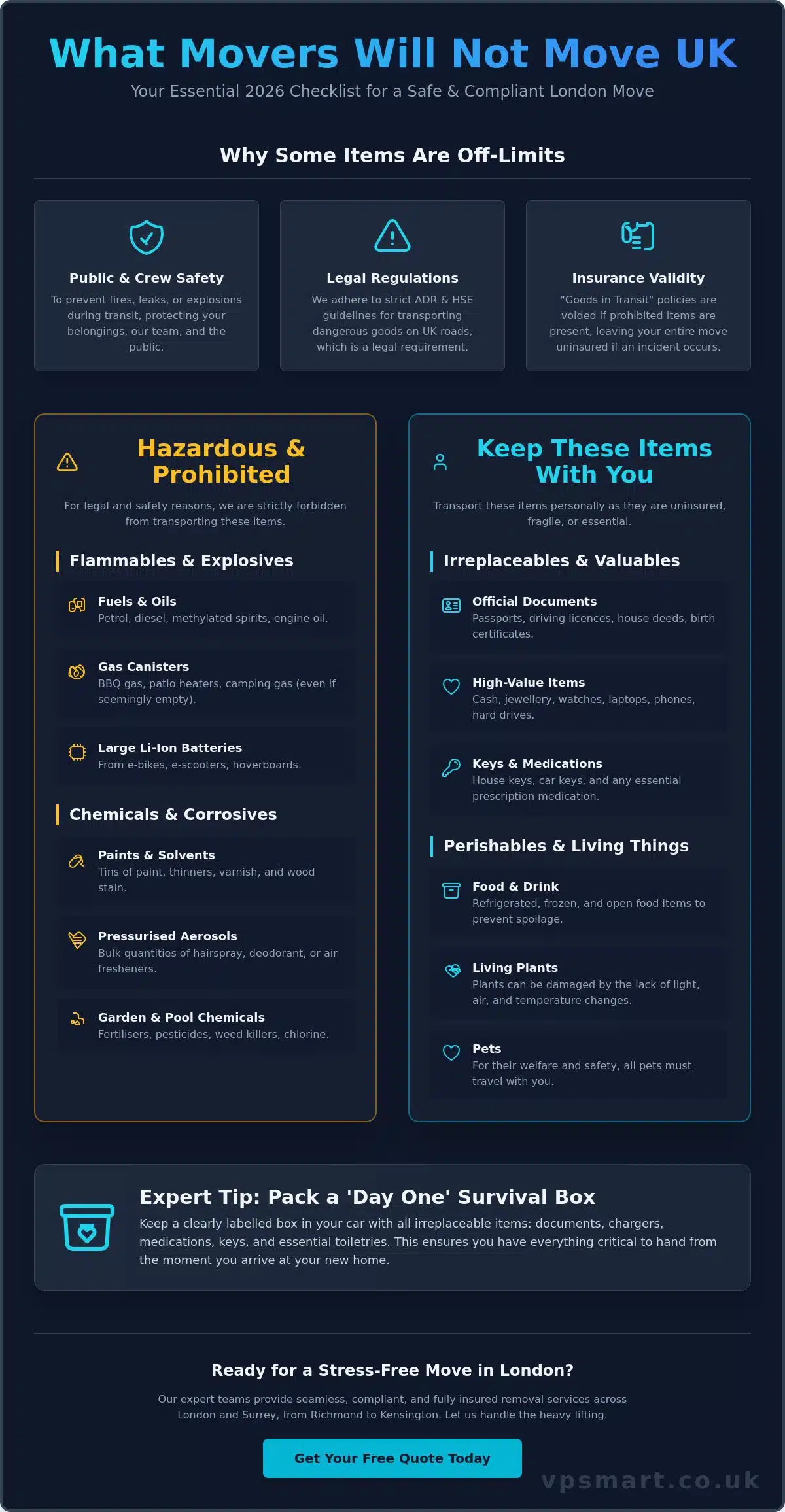
Your team cannot transport fuels like petrol, diesel, or methylated spirits due to their volatile nature. While many homeowners remember the lawnmower fuel, modern hazards like large lithium-ion batteries in e-bikes and electric scooters are often overlooked. These batteries pose a significant fire risk in enclosed spaces. Similarly, gas canisters for BBQs or patio heaters are restricted even if they appear empty, as residual pressure can lead to explosions during temperature fluctuations in the van.
Chemical Hazards and Pressurised Containers
When identifying what movers will not move uk, chemicals are often the most confusing category. Common household items like concentrated fertilisers, pool chemicals, and bulk quantities of aerosols are typically prohibited. A single canister of hairspray might seem harmless, but a large collection becomes a pressurised hazard in a moving vehicle. Lead-acid car batteries are also excluded because of their corrosive acid content. If you’re moving from Kensington or Richmond, it’s best to consult professional waste removal services to ensure these chemicals are handled according to environmental standards before your moving day.
Perishables, Plants, and Personal Valuables: Items Best Kept With You
Beyond chemical risks, the list of what movers will not move uk includes items that are simply too fragile or sensitive for the environment of a moving van. Most removal companies prioritise the hygiene and safety of their equipment; this is why perishable goods and living things are strictly excluded. If you are also utilising storage services, these restrictions are even more rigid. Prohibiting organic matter prevents pest infestations and moisture damage that could compromise the domestic well-being of the entire facility.
The “irreplaceable” rule is a vital concept for any homeowner in Richmond or Kensington. Items like cash, jewellery, passports, and house deeds should stay in your personal vehicle under your direct oversight. Transit insurance often has specific limits on high-value portable assets, meaning your personal car is the most secure environment for these essentials. Our professional packing services can provide advice on how to secure the small valuables you choose to carry yourself during the transition.
Food and Living Things
Frozen and refrigerated food poses a significant logistical challenge. Even a short 4-hour move across Central London can lead to defrosting, which creates a risk of bacterial growth and messy leakages. Similarly, house plants are often excluded because they struggle with the lack of light and ventilation in a dark van. When moving house, check the UK government’s list of banned and restricted goods if your journey involves crossing borders, as strict rules apply to plants and organic matter. Pets, naturally, must never be transported in the cargo hold for welfare reasons.
Irreplaceable Documents and High-Value Assets
We recommend packing a dedicated “survival box” for your most critical paperwork. This includes birth certificates, share certificates, and essential financial documents. Keeping these items with you ensures they are immediately accessible the moment you arrive at your new property in Surrey or Kingston. By maintaining oversight of these high-value assets, you eliminate the stress of searching through dozens of boxes for a single important document on your first night.
Navigating Moving Day Logistics: Preparing Prohibited Items for Transport
Many items on the list of what movers will not move uk are actually transportable once you’ve followed specific safety protocols. When planning removals London, it’s vital to distinguish between items that are permanently banned and those that just need technical preparation. Professional house removals in London require advance notice for any item requiring specialist equipment to ensure your moving day remains efficient and stress-free.
This proactive approach gives you complete oversight of the process, turning a complex logistics puzzle into a manageable home transition. By handling the preparation of permitted machinery early, you ensure the safety of the crew and the integrity of your other household goods.
While domestic movers focus on household items, those requiring large-scale logistics for shipping containers can rely on specialists like jhaulage.co.uk to manage transport from major UK ports to their final destination.
Preparing Power Tools and Garden Equipment
Your garden machinery, such as lawnmowers and hedge trimmers, must be fully drained of fuel and oil before being loaded. Removing these flammable liquids transforms a prohibited hazard into a safe, permitted item for transit. Following these packing tips ensures your equipment doesn’t leak or create fumes during the journey to your new home in Surrey or Kingston.
- Empty all petrol and diesel from fuel tanks into approved containers for safe disposal.
- Remove oil filters and wipe down engines to prevent residue spills on the van floor.
- Scrub soil from spade heads and mower decks to prevent the transfer of garden pests or invasive species.
If you have legacy equipment that’s no longer operational, our waste removals service provides a convenient way to clear your garage in Richmond before the main move begins.
London-Specific Moving Challenges
Managing house removals in Kensington or Central London often involves narrow roads and strict parking enforcement zones. You must arrange for ULEZ-compliant disposal of old paints or chemicals that cannot be loaded onto the van. If you’re moving house with large furniture that won’t fit through a period property’s doorway, a professional hoisting service offers a safe alternative to traditional loading.
Keep in mind that secure storage facilities have even tighter restrictions than transit vehicles. You should never include liquids or combustible materials in a storage unit, as these can compromise the domestic well-being of the entire site. Maintaining oversight of these logistical details ensures your move adheres to regional quality benchmarks and avoids unnecessary delays on the day.
If your move involves transitioning a business in the hospitality sector, you can learn more about Shift4 POS UK to discover how advanced EPOS solutions can help manage your new site efficiently.
Secure Your Seamless Transition
Mastering the logistics of your relocation starts with complete oversight of your inventory. By identifying exactly what movers will not move uk, you protect your domestic well-being and ensure your transition is both safe and compliant with 2026 standards. Remember that while hazardous chemicals and irreplaceable assets like passports belong in your personal vehicle, correctly preparing your power tools and garden equipment ensures they remain permitted for transit.
Our experienced team specialises in handling complex moves across Greater London and the UK, including delicate items like pianos. We provide fully insured removals and maintain total transparency with no hidden stair charges, so you can focus on settling into your new home. Whether you’re moving from a Kensington apartment or a Surrey estate, we are here to support your journey with technical expertise and dependable care.
Get a transparent, fixed-price quote for your London move today and take the first step toward an effortless and well-managed moving day. We look forward to helping you move forward with confidence.
Frequently Asked Questions
{
“@context”: “https://schema.org”,
“@type”: “FAQPage”,
“mainEntity”: [
{
“@type”: “Question”,
“name”: “Can movers take my gas BBQ bottle if it is disconnected?”,
“acceptedAnswer”: {
“@type”: “Answer”,
“text”: “No, professional removal teams cannot transport gas BBQ bottles even if they are disconnected. ADR 2025 regulations classify these as hazardous due to residual pressure risks. You should arrange for your supplier to collect the cylinder or transport it yourself in an upright, well-ventilated personal vehicle.”
}
},
{
“@type”: “Question”,
“name”: “How do I move my house plants safely during a London relocation?”,
“acceptedAnswer”: {
“@type”: “Answer”,
“text”: “The safest way to move house plants is in your own vehicle where you can manage light and temperature. Standard removals London vans are dark and lack ventilation, which can cause significant stress to delicate species. Place them in open boxes on the floor of your car for stability during the drive to your new home.”
}
},
{
“@type”: “Question”,
“name”: “Will removal companies transport my collection of wine or spirits?”,
“acceptedAnswer”: {
“@type”: “Answer”,
“text”: “Yes, removal companies generally transport alcohol, provided it is packed in specialised double-walled bottle boxes. It is essential to verify that your transit insurance covers high-value vintages. If you have an extensive collection, notify your team early so they can prioritise secure loading and oversight.”
}
},
{
“@type”: “Question”,
“name”: “What should I do with old tins of paint that the movers won’t take?”,
“acceptedAnswer”: {
“@type”: “Answer”,
“text”: “You must take old paint tins to a local London borough recycling centre, as they are on the list of what movers will not move uk. Because liquid paint can leak and cause catastrophic damage to other furniture, it is a prohibited item. For large volumes of old chemicals, consider a dedicated waste removal service before moving house.”
}
}
]
}
Can movers take my gas BBQ bottle if it is disconnected?
No, professional removal teams cannot transport gas BBQ bottles even if they are disconnected. ADR 2025 regulations classify these as hazardous due to residual pressure risks. You should arrange for your supplier to collect the cylinder or transport it yourself in an upright, well-ventilated personal vehicle to ensure the safety of the crew and the public.
How do I move my house plants safely during a London relocation?
The safest way to move house plants is in your own vehicle where you can manage light and temperature. Standard removals London vans are dark and lack ventilation, which can cause significant stress to delicate species. Place them in open boxes on the floor of your car for better stability and oversight during the drive to your new home in Richmond or Kingston.
Will removal companies transport my collection of wine or spirits?
Yes, removal companies generally transport alcohol, provided it is packed in specialised double-walled bottle boxes. It is essential to verify that your transit insurance covers high-value vintages, as standard policies may have limits. If you have an extensive collection, notify your team early so they can prioritise secure loading and apply professional packing tips to prevent breakages.
What should I do with old tins of paint that the movers won’t take?
You must take old paint tins to a local London borough recycling centre, as they are on the list of what movers will not move uk. Because liquid paint can leak and cause catastrophic damage to other furniture, it is a strictly prohibited item in transit. For large volumes of old chemicals or hazardous waste, consider booking a dedicated waste removal service before moving house to ensure your environment is cleared safely.
Disclaimer
Some links in this article may be affiliate links, which means we may earn a small commission if you make a purchase through them, at no additional cost to you. We only recommend products or services we believe provide value to our readers.