
Imagine manoeuvring a bespoke velvet sofa through a narrow Kensington townhouse corridor only to hear the sickening sound of fabric tearing against a sharp door hinge. It’s a nightmare scenario that many homeowners face when navigating the tight turns and steep staircases typical of West London properties. Protecting furniture during a move requires more than just luck; it demands a strategic, technical approach to shielding your investments from harm.
To secure these blankets, experts use high-quality stretch film rather than adhesive tape. Shrink wrap sticks only to itself, which means it won’t leave a sticky residue on your mahogany sideboard or velvet armchair. It also serves a dual purpose by keeping chest drawers and cabinet doors firmly shut without the need for keys or separate locks. This technical approach to packing is a core part of professional House Removals, where the goal is always a residue-free and secure transition.
We understand that your furniture represents both a significant financial investment and the heart of your home’s comfort. You shouldn’t have to settle for the anxiety of potential damage or the confusion of choosing between a £4.00 armchair cover and professional grade moving blankets. This guide will help you master the elite techniques used by London’s premier removal experts to ensure every piece arrives in pristine condition.
You’ll learn how to implement a three tier protection system, from structural disassembly to navigating the logistical hurdles of the £18 daily Congestion Charge zones. We’ll transform your moving experience into a seamless, controlled process that guarantees peace of mind from Richmond to the city’s heart.
Key Takeaways
- Discover why professional-grade moving blankets provide superior impact protection compared to household linens, ensuring your high-value items remain scratch-free.
- Master the professional techniques for protecting furniture during a move, from using breathable covers on sofas to shielding delicate French-polished surfaces.
- Learn to navigate the “London Squeeze” in narrow period properties by utilizing specialized lifting straps and strategic vertical transport methods.
- Understand how stretch film acts as a secure, residue-free solution for keeping drawers closed and blankets firmly in place during transit.
- Gain total control over your relocation by combining structural disassembly with expert knowledge of London’s unique architectural and logistical challenges.
The Foundation of Furniture Safety: Essential Materials and Smart Preparation
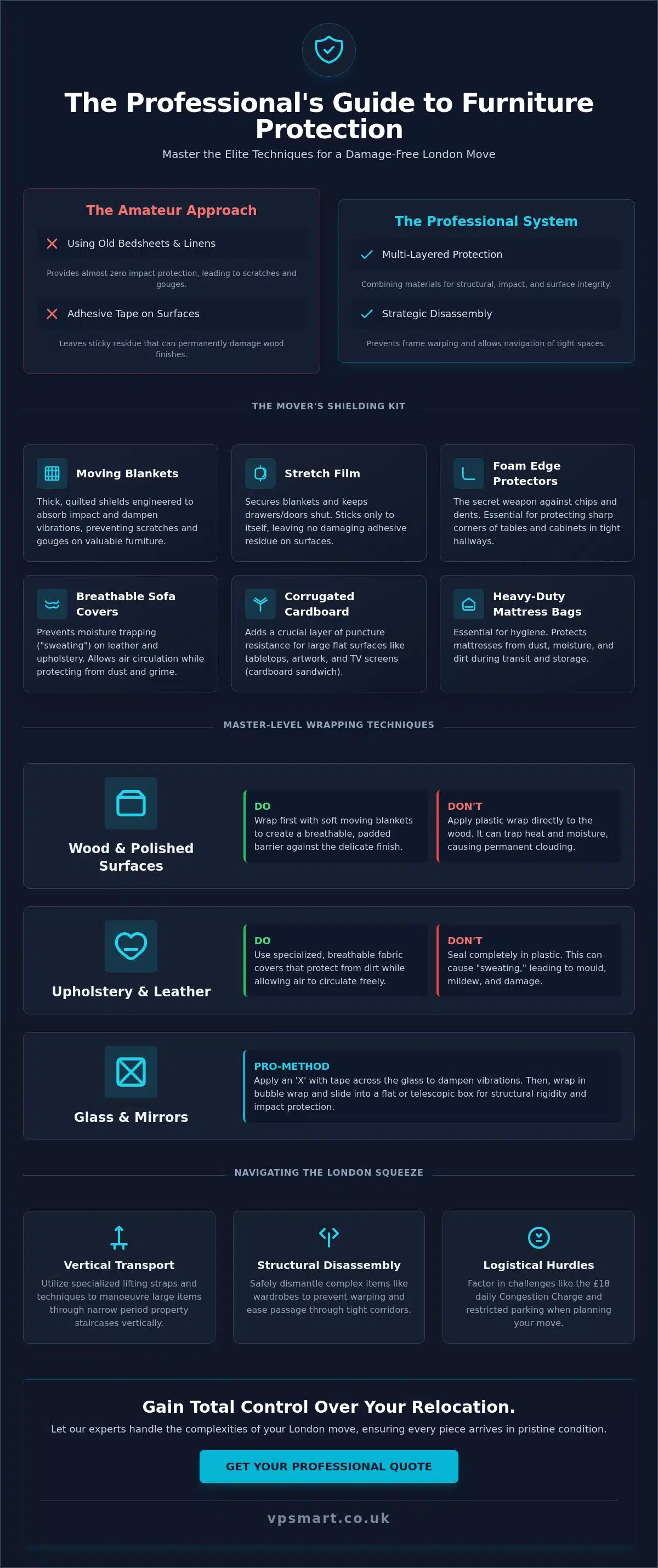
Success in protecting furniture during a move begins long before the van arrives at your door. Professional movers don’t rely on luck; they use a specific hierarchy of materials designed to absorb impact and prevent friction. While it’s tempting to use old bedsheets, these provide almost zero protection against the structural shocks of a journey through Central London traffic.
Professional-grade moving blankets are the cornerstone of any safe relocation. These thick, quilted shields are engineered to dampen vibrations and prevent the deep gouges that occur when items shift in transit. They are a vital tool for furniture conservation and restoration, ensuring that delicate wood finishes remain unmarred by the rigours of the road.
To secure these blankets, experts use high-quality stretch film rather than adhesive tape. Shrink wrap sticks only to itself, which means it won’t leave a sticky residue on your mahogany sideboard or velvet armchair. It also serves a dual purpose by keeping chest drawers and cabinet doors firmly shut without the need for keys or separate locks.
Your toolkit must also include a steady supply of moving boxes London homeowners can rely on for heavy-duty support. Pair these with industrial-strength tape and a “smart” inventory system. By numbering each item and linking it to a digital list, you’ll maintain total control over your belongings as they move from your old home to a new South West London residence.
The Professional Mover’s Shielding Kit
Beyond blankets, specific items require tailored solutions. Heavy-duty mattress bags are essential for maintaining hygiene, while bespoke sofa covers prevent dust and moisture from settling into expensive upholstery. For high-value flat surfaces, corrugated cardboard sheets offer an extra layer of puncture resistance that plastic wrap alone cannot provide.
Don’t overlook the vulnerability of sharp edges. Foam corners are the “secret weapon” for protecting furniture during a move, especially when navigating the tight turns of a Kingston apartment block. These simple additions can save a dining table from a permanent chip during a momentary lapse in clearance.
Transit insurance is a dedicated protection policy that covers the financial value of your items should any accidental damage or loss occur while they are in the care of a removal company.
Master-Level Wrapping Techniques for Every Item Type
Protecting furniture during a move isn’t a one-size-fits-all task. Different materials require distinct scientific approaches to ensure they survive the transition without damage. For French-polished oak or delicate hardwood, you must avoid placing plastic wrap directly against the wood surface. This can trap heat and lead to permanent clouding or finish damage, a common mistake that ruins high-value pieces.
Upholstered items, particularly leather, present a unique challenge. While many competitors suggest sealing sofas in plastic, this often causes “sweating,” where moisture becomes trapped against the fabric. Instead, use breathable fabric covers. These allow air circulation while providing a robust barrier against the grime of the city, ensuring your sofa arrives fresh and dry.
Glass and mirrors require a structural rigidity approach. Use the “X” tape method across the glass to dampen vibrations, then slide the item into a telescopic box. This dual-layered system ensures that even if the box takes a knock during a move in Richmond, the glass remains intact. This method provides the total control needed for fragile household components.
Step-by-Step: Wrapping a Large Wardrobe
Bulky wardrobes often lack the structural integrity to be moved whole. Start by removing all internal shelves and securing doors with non-adhesive stretch film. If the piece is particularly complex, such as a bespoke unit or a large IKEA Pax, it’s often safer to use professional furniture assembly services to dismantle and reassemble it. This prevents the frame from warping or snapping under its own weight during transit.
Electronics and Fragile Antiques
TV screens and monitors are sensitive to static and pressure. Use anti-static bubble wrap and create a “cardboard sandwich” by taping sheets to the front and back for impact resistance. For delicate antique legs, use a “mummy wrapping” technique with thin strips of foam followed by a layer of shrink wrap to keep everything tight and secure. If you’re feeling overwhelmed by the technicalities of a complex move, our movers and packers can provide the expert precision your home deserves.
Navigating the London Move: Advanced Logistics and Access
Moving furniture through a Victorian terrace in Fulham or a narrow townhouse in Kensington often leads to the “London Squeeze.” This occurs when architectural constraints meet modern furniture dimensions. Effectively protecting furniture during a move in these environments requires more than just padding; it requires a deep understanding of spatial geometry and specialized equipment.
Professional movers and packers London rely on industrial lifting straps for vertical transport. These straps redistribute the weight of heavy wardrobes or pianos to the mover’s shoulders. This technique provides the precision needed to navigate tight landings without the furniture ever touching a wall or banister.
Sometimes, the internal dimensions of a property simply won’t permit a safe transit. When a sofa is too large for the stairwell, a professional hoisting service becomes the smart solution. We utilize external lifting systems to transition bulky items through windows or over balconies, bypassing treacherous interior turns and ensuring the structural integrity of your home remains uncompromised.
Once the items reach the vehicle, we apply “Tetris” logic to the loading process. Every piece is secured with heavy-duty tie-down straps to prevent shifting during the sudden stops of London traffic. This level of control ensures that a journey through the £12.50 ULEZ zones or the £18 daily Congestion Charge area won’t result in internal cargo damage.
Borough-Specific Access Challenges
Managing the legalities of a move is just as important as the physical lifting. In Central London, reserving a parking bay is essential to avoid fines and ensure a fast transfer. Most councils require between 7 and 14 working days of notice for a suspension, with daily costs typically ranging from £30 to £100 depending on the specific borough.
High-rise moves in East London or the Docklands introduce different variables, such as lift bookings and building management protocols. We provide protective padding for common areas and lift interiors to prevent accidental damage to the building’s fabric. For those relocating across the river, our specialized knowledge of house removals South London ensures we navigate the complex parking zones of Wandsworth and Lambeth with total efficiency.
Secure Your London Move with Expert Precision
Mastering the technical art of protecting furniture during a move transforms a potentially chaotic day into a seamless transition. You’ve learned that shielding your assets requires a precise hierarchy of professional materials, from quilted blankets to breathable fabric wraps that prevent moisture buildup. You also understand that navigating the architectural constraints of Kensington or Fulham demands specialized equipment like lifting straps and hoisting systems.
With over 10 years of London moving expertise, we provide the technical authority needed for even the most complex relocations. Our comprehensive service includes full furniture disassembly and reassembly as standard, ensuring your bulky items aren’t compromised by structural stress during transit. Whether you require piano removals or specialist hoisting for window entry, we possess the hardware and the local knowledge to protect your environment.
Your new beginning deserves a damage-free start in a home that feels warm and well-managed from the moment you arrive. Take the first step toward a smarter relocation today. Get a Fixed-Price Quote for Your Stress-Free London Move and enjoy the peace of mind that comes with professional British standards.
Frequently Asked Questions
Should I take my furniture apart before the movers arrive?
You should dismantle large or structurally complex items like wardrobes and bed frames to ensure they remain stable during transit. This prevents the frame from warping or screws from pulling out under stress. If you’re unsure or short on time, professional furniture assembly services can handle this technical task for you, ensuring every component is correctly labelled and stored for a seamless setup in your new home.
How do I protect my furniture from rain during a London move?
Use heavy-duty, waterproof plastic covers specifically designed for sofas and mattresses to shield them from unpredictable weather. These covers, which typically cost between £4.00 and £9.98 depending on the size, provide an impermeable barrier against moisture. For wooden items, wrap them in moving blankets first, then seal the exterior with stretch film to prevent rain from reaching the delicate finish during the transfer to the van.
Is bubble wrap safe to use directly on wooden furniture?
You shouldn’t apply bubble wrap directly to wooden surfaces because the plastic can trap moisture or leave permanent circular imprints on the finish. When protecting furniture during a move, always use a quilted moving blanket as the primary layer. This soft barrier cushions the wood while allowing it to breathe, and you can then secure the blanket with stretch film or tape on the outside of the padding.
What is the best way to move a heavy piano without damaging the floor?
The most effective method is using a professional piano dolly equipped with non-marking rubber wheels and heavy-duty floor runners. These tools distribute the weight evenly, preventing deep scratches or cracks in hardwood and tiled surfaces. Because an upright piano can weigh over 200kg, it’s safer to use a specialist piano removals service that employs hydraulic tail lifts and specific transit shoes to maintain total control during the move.
Disclaimer
Some links in this article may be affiliate links, which means we may earn a small commission if you make a purchase through them, at no additional cost to you. We only recommend products or services we believe provide value to our readers.